Across the communications landscape, teams are being asked to do more with less, while staying aligned, responsive and compliant in the face of complex and often shifting stakeholder demands. In that environment, how we track, report and manage our relationships really matters.
In too many organisations, relationship management is still built around tools designed for customer sales. CRM systems, built for structured pipelines and linear user journeys, have long been the default for managing contact databases. They work well for sales and customer service functions. But for communications professionals managing journalists, political offices, internal leaders and external advocates, these tools often fall short.
Stakeholder relationships don’t follow a straight line. They change depending on context, shaped by policy shifts, public sentiment, media narratives or crisis response. A stakeholder may be supportive one week and critical the next. They often hold more than one role, and their influence doesn’t fit neatly into a funnel or metric.
Managing these relationships requires more than contact management. It requires context. The ability to see not just who you spoke to, but why, and what happened next. Communications teams need shared visibility across issues and departments. As reporting expectations grow, that information must be searchable, secure and aligned with wider organisational goals.
What’s often missing is infrastructure. Without the right systems, strategic relationship management becomes fragmented or reactive. Sometimes it becomes invisible altogether.
This is where Stakeholder Relationship Management (SRM) enters the conversation. Not as a new acronym, but as a different way of thinking about influence.
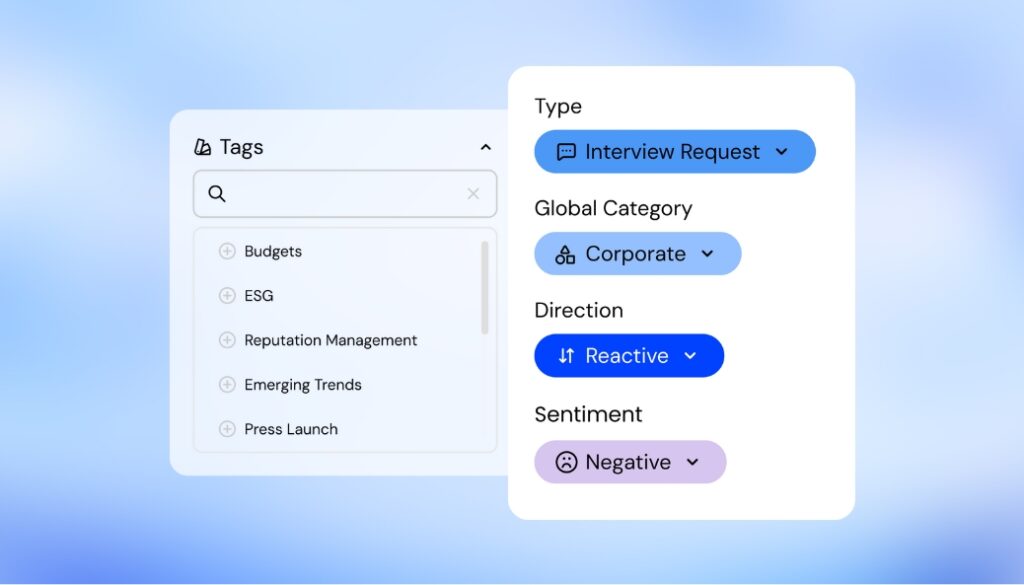
At Isentia, we’ve seen how a purpose-built SRM platform can help communications teams navigate complexity more confidently. Ours offers a secure, centralised space to log and track every interaction, whether it’s a media enquiry, a ministerial meeting, or a community update, and link it to your team’s broader communications activity.
The aim isn’t to automate relationships. It’s to make them easier to manage, measure and maintain. It’s about creating internal coordination before the external message goes out.
Because in today’s communications environment, stakeholder engagement is not just a support function. It is a strategic capability.
Loren is an experienced marketing professional who translates data and insights using Isentia solutions into trends and research, bringing clients closer to the benefits of audience intelligence. Loren thrives on introducing the groundbreaking ways in which data and insights can help a brand or organisation, enabling them to exceed their strategic objectives and goals.
Isentia’s budget night analysis of stakeholder reactions straight from lock-up this evening in Parliament House as stakeholders addressed the Conga-line, along with fresh analysis of key stakeholder media releases from a range of sectors.
The 60-Second Summary
The 2026 Federal Budget is a story of broken promises and big bets. The Labor government went where it said it wouldn’t in the last election just 12 months ago, scrapping the 50 per cent capital gains tax discount, winding back negative gearing on existing properties, and imposing a 30 per cent minimum tax on discretionary trusts.
The dominant mood from stakeholders? Split right down the middle. Unions and social services groups cheered what they called a once-in-a-generation rebalancing of the tax system. Business groups, property investors, and the Coalition called it a betrayal that will scare investment offshore.
Behind the tax headlines, the Budget committed an additional $14 billion over the next four years and $53 billion over the decade to defence, $25 billion in extra public hospital funding, $14.8 billion for fuel security, and $2 billion for housing enabling infrastructure. But the cuts were deep, in particular the $37 billion savings from the NDIS.
For many, this is a budget of trade-offs: young homebuyers gaining ground, while older Australians and people with disability are left anxious about what comes next.
Senator David Pocock’s initial comments on the budget commended the Treasurer on many elements, noting the gas tax was sorely missing. But ultimately said for many Australians looking at the budget are wondering why it didn’t put them ahead for their best interests. “When you read through the budget papers, clearly, it sucks to be poor, it sucks to be old and it sucks to be a native species, and we have to make sure the Australian Government is spending its money on the priorities the Australian people want”.
Key Numbers at a Glance
Defence spending
$14 billion over the next four years and $53 billion over the decade, along with other measures, brings total funding in the portfolio to $887 billion to 2035-36
NDIS savings
$37 billion in cuts
Public hospital funding
$25 billion additional
Fuel resilience package
$14.8 billion
Housing infrastructure
$2 billion for 65,000 homes
Working Australians Tax Offset
$250 per worker
Sector Scorecards
Tax & Cost of Living [Mixed]
The headline reforms in this budget are all about tax. The government replaced the 50 per cent CGT discount with an inflation-indexation model capped at 30 per cent, restricted negative gearing to new builds (limited to two properties), and imposed a 30 per cent minimum tax on discretionary trust distributions. It also introduced a permanent $250 Working Australians Tax Offset and cut the low-income marginal rate from 16 to 15 per cent (dropping to 14 per cent in July 2027). The CGT and negative gearing changes are expected to raise $3.6 billion in their first two years.
The ACTU welcomed the measures as a generational rebalancing. ACTU President Michele O’Neil said the budget was about fairness, giving workers a better shot at housing and ending a system that taxed work harder than wealth. But the Australian Chamber of Commerce and Industry (ACCI) warned the changes would drive investment offshore. ACCI acting CEO David Alexander said matching spending blowouts with tax hikes would lock in a slow-growth economy. The Business Council of Australia took a middle path, welcoming productivity measures but flagging concern about the CGT and negative gearing changes making Australia less competitive.
“Higher taxes will scare away investment in Australian businesses and send this funding to more welcoming overseas jurisdictions,” said Mr Alexander.
Bob Katter called the low-income tax cut so small it “doesn’t even buy a beer” and accused the government of breaking its promise not to change CGT and negative gearing. The Australian Industry Group’s Innes Willox noted Australia now has among the highest capital gains tax rates in the world. ACOSS CEO Dr Cassandra Goldie welcomed the tax reforms but criticised the $250 tax offset for going to everyone in paid work while 4 million people on the lowest incomes — those on JobSeeker, Youth Allowance, the Disability Support Pension — got nothing.
Housing & Property [Mixed]
Housing dominated the budget narrative. The CGT and negative gearing changes were framed as the government’s answer to the affordability crisis, backed by $2 billion in water, roads and sewage infrastructure to support 65,000 new homes over the next decade. A $60 million National Youth Housing Supplement will unlock social housing for over 4,000 young people, fixing a long-standing “youth housing penalty” that made young tenants financially unviable for community housing providers.
Homelessness Australia CEO Kate Colvin called it a hard-won win for young people failed by a system that catches them in crisis but never houses them. The Australian Community Housing sector’s Mark Degotardi said there was no criticism from the sector — the budget restores balance to a housing system long overdue for reform.
But others were sharply critical. Master Builders CEO Denita Wawn said the government’s own modelling showed the tax hike would reduce supply by 35,000 homes, and even with productivity measures adding 65,000, the net gain of 30,000 was nowhere near enough when Australia is already falling short by 200,000 homes. The Property Council’s Mike Zorbas called the tax changes a big roll of the dice, warning the government must closely monitor investor behaviour.
“If the tax hike on property had not been introduced tonight, we would instead be up by over 100,000 homes over 10 years,” said Ms Wawn.
The Greens were scathing from the other direction. Leader Adam Bandt said the property investor tax perks were largely intact — about 95 per cent of the benefit remained — and there was no new money for public housing. Housing advocacy group House You’s Chelsea Withey called the budget ongoing violence against unhoused people.
Healthcare & Medicare [Mixed]
The budget locked in $25 billion in additional funding for public hospitals under the new National Health Reform Agreement and introduced a Medicare-funded three-year-old health check through GPs. But the AMA said the rest was thin. AMA President Dr Danielle McMullen warned of a remaining funding gap of at least $9.6 billion in hospital funding and criticised the lack of broader Medicare modernisation.
“Urgent care centres and targeted bulk billing in certain geographic areas are not long-term solutions. We need to see true reform of Medicare,” Dr McMullen said.
The AMA also raised alarm over cuts to the private health insurance rebate for over-65s, warning it could force older Australians to drop or downgrade cover and pile extra pressure on public hospitals. The Australian College of Nursing called for a national nursing workforce strategy, warning of a projected shortage of more than 70,000 nurses by 2035. The RACGP welcomed the three-year-old health check and RSV vaccination funding but flagged disappointment on racism in the health system.
Disability & NDIS [Negative]
The budget’s single biggest savings measure is a $37 billion cut to the NDIS through tighter eligibility, stronger fraud controls, mandatory provider registration and a target of reducing participant numbers by 160,000 by 2030. The BCA supported the structural reforms as necessary to return the scheme to its original intent, but disability advocates and welfare groups were alarmed.
ACOSS CEO Dr Cassandra Goldie said people with disability were very frightened about what the reforms mean and urged the government to keep them at the centre of any changes. The Greens’ Adam Bandt accused the government of cutting $37 billion from disability services to fund $53 billion in weapons spending. Bob Katter acknowledged the NDIS needed restructuring to tackle rorting but said the measures targeted eligibility fraud while the bigger problem — rorting by scheme administrators — remained unaddressed.
“It is outrageous that fraudulent businesses have been created with the primary purpose of effectively thieving from, neglecting and defrauding some of the most vulnerable members of our society,” Mr Katter said.
Defence & National Security [Positive]
As previously announced, the government is proposing commitments of $425 billion to defence over the next decade, targeting 3 per cent of GDP by 2034. This is a proposed increase of $14 billion over the next four years, and $53 billion across the decade.
Spending targets include accelerating nuclear submarines and surface ships under AUKUS, expanding long-range strike capabilities, and boosting uncrewed systems. Bob Katter welcomed the spending direction but said it failed to shore up foundations, calling for action to regain control of strategic assets like ports and airfields and to increase the number of combat-ready civilians.
Energy & Environment [Negative]
Energy policy drew some of the sharpest reactions. The government committed $14.8 billion to a Strengthening Australia’s Fuel Resilience package and $10 billion to extend domestic fuel stockpiles.
The ACTU welcomed these as job-saving measures. But the Climate Council slammed the government for the proposed $19 billion in annual fossil fuel subsidies and for forgoing gas export tax revenue, calling it a massive free kick for fossil fuel corporations.
“This Budget maintains the $19 billion gravy train for big fossil fuel corporations,” said Climate Council CEO Amanda McKenzie.
The Australian Conservation Foundation (ACF) claimed seven times more funding was being spent on initiatives that damage nature and climate than protect it. Both the Climate Council and ACF criticised the government for failing to impose a 25 per cent tax on gas exports, which they estimated could raise $17 billion annually. Bob Katter, from the opposite direction, welcomed the rollback of net-zero spending but said it came too late to undo the economic damage.
Small Business [Mixed]
Small business got some wins: the $20,000 instant asset write-off was made permanent, and companies under $1 billion turnover can now carry back tax losses against tax paid up to two years earlier (at a budget cost of $2.3 billion over three years). ACCI welcomed both measures. But the 30 per cent minimum tax on trust distributions alarmed the sector. ACCI’s David Alexander warned the trust tax would damage business operations and productivity because management is having their pay permanently cut by government. Trusts are commonly used by small businesses to protect assets and ensure continuity.
Education [Negative]
Education was mostly absent from the budget. The Greens’ Senator Faruqi rallied with the National Union of Students to demand reversal of job-ready graduates fee hikes that have produced $52,000 arts degrees. NUS National President Felix Hughes said the words “student” and “university” were not mentioned once in the Treasurer’s speech. The Australian Education Union welcomed the housing measures that help teachers locked out of the areas where they teach, but flagged deep concern about $472 million in savings to disability funding for schools.
“Budgets are about priorities and young people will look at this budget and wonder if they are a priority at all,” said Felix Hughes, NUS National President.
Aged Care [Mixed]
The government reclassified personal care as clinical care in aged care, removing co-contributions for services like showering and mobility assistance.
Uniting Care welcomed the $3 billion investment but said it wasn’t enough for high-quality residential aged care. Council of the Ageing’s Patricia Sparrow noted no new home care packages were announced in the Budget, despite older people waiting up to a year for support.
Sparrow also raised alarm about the private health insurance rebate changes hitting 2.6 million older Australians. National Seniors’ Chris Grice said older Australians were already contacting them, unhappy about the insurance changes, and questioned how a 30 per cent minimum tax on shares helps create affordable housing.
Science & Research [Mixed]
The R&D tax incentive threshold was raised from $150 million to $200 million, and the refundable offset lifted from $20 million to $50 million. CSIRO received a $387 million funding boost. The Australian Academy of Technological Sciences and Engineering welcomed the investment in publicly funded research agencies. But Science & Technology Australia’s Ryan Winn warned that the sector lost $1.5 billion in research funding, including $800 million from the Australian Economic Accelerator program, making the research landscape leaner and meaner.
Infrastructure & Transport [Mixed]
The $2 billion housing-enabling infrastructure fund was the main infrastructure announcement. Civil Contractors Federation CEO Nicholas Proud welcomed the direct connection between infrastructure and housing as the missing piece. Big-ticket items include $3.8 billion for Melbourne Rail and $50 million for Sydney-Canberra rail. Bob Katter slammed the regional infrastructure spend as ridiculously low, demanding funding for North Queensland projects. The tourism sector was hit by a $10 increase in the passenger movement charge (from $70 to $80), which Tourism and Transport Forum CEO Margy Osmond called a shocker, generating over a billion dollars over the forward estimates.
Employment & Industrial Relations [Mixed]
The budget includes reforms to employment services, which ACOSS said it hoped would transform a system that has treated low-income people shockingly for far too long. Skills recognition for overseas qualifications was welcomed as a productivity measure. But the Electrical Trades Union’s Michael Wright warned that despite record investment in vocational education, electrical apprenticeship commencements have fallen every year since 2022, with a forecast shortfall of 40,000 electricians by 2030.
Social Services & Welfare [Negative]
ACOSS CEO Dr Cassandra Goldie gave the budget’s starkest welfare critique: 4 million people on the lowest incomes — on JobSeeker, Youth Allowance, Disability Support Pension, or the Age Pension — got no cost-of-living relief. The remote area allowance, at $9 per week, has not increased in 25 years. The government’s own Economic Inclusion Advisory Committee has recommended fixing income support adequacy four years in a row, and four years in a row those people have been left waiting.
Childcare & Early Learning [Negative]
The Parenthood’s Georgie Dent called the budget a missed opportunity for families with young children. There was no expansion of paid parental leave and no clarity on the future of the 15 per cent early childhood educator wage increase set to expire. With 260,000 educators unsure whether their wages will go backwards and 1.4 million families paying childcare as their second-highest household expense, Dent said parents needed answers immediately.
Veterans' Affairs [Negative]
Veterans slammed $780 million in cuts to allied health services, with Fair Care for Veterans saying the Government was using unsubstantiated claims of fraud to short-change those who served. The savings come from a new annual monetary limit on veterans' allied health services — $750 million over three years plus $340 million per year ongoing. The group pointed out that 60–80 per cent of initial DVA decisions are overturned on appeal, suggesting the real problem is systematic undervaluation of claims, not fraud.
A single private contractor, MLCOA, holds a $68.3 million sole-provider contract to assess every veteran's compensation claim, with no panel and no alternative. Treating doctors who specialise in veteran claims are paid as little as $71.80 for a compensation report — while MLCOA is paid up to $3,500 per condition for the same task.
"We served our nation to the best of our ability and were put in dangerous situations doing so. We did it because we love our country. So it's really disappointing when we are treated like criminals and frauds by our country when we seek treatment for injuries we got in service." — Kiel Goodman, Fair Care for Veterans spokesman
National polling by Fox & Hedgehog found 70 per cent of Australians support more veteran disability support, while 46 per cent lack confidence in the Government's ability to support veterans. The survey of 2,000 adults also showed 50 per cent support increasing defence spending.
Gambling Reform [Negative]
The Government tabled its response to the Peta Murphy gambling inquiry — during budget lock-up, which the Alliance for Gambling Reform said was an attempt to bury it. The reforms include a ban on gambling ads online (with an opt-out for users), banning sports players and celebrities from ads, and removing betting ads from stadiums and uniforms.
But the Alliance said the reforms were too weak. Chief Advocate Tim Costello said the opt-out model puts the burden on parents, not gambling companies. Three gambling ads per hour are still allowed between 6am and 8:30pm, with no cap after 8:30pm. Research cited by the Alliance showed more than 600,000 underage kids aged 12–17 bet more than $18 million a year.
"Not a single parent in this country would 'opt in' to their kids seeing gambling ads - that's why it's 'opt out' - many people will forget or not realise, and it just puts greater onus on parents to always be logging in and opting out of countless apps and sites, it's ridiculous." — Rev. Tim Costello, Chief Advocate, Alliance for Gambling Reform
Tourism & Hospitality [Negative]
The $10 increase in the passenger movement charge (to $80) was the headline blow for tourism. TTF CEO Margy Osmond said it came at the worst possible time, with the international aviation market unpredictable and regional tourism collapsing under fuel uncertainty. The Australian Airports Association’s Simon Westaway added that the charge would generate over a billion dollars but with no new funding for border modernisation, airports would have to invest in bigger sheds rather than seamless travel experiences.
Financial Services [Negative]
The Financial Services Council’s Blake Briggs criticised the CGT changes for using housing equity as a stalking horse for tax increases across all asset classes. With GDP growth at just 1.75 per cent, he said it made no sense to direct investment away from productive assets like managed funds, ETFs and venture capital.
Public Sector [Mixed]
The CPSU said overall public sector staffing levels were maintained, but job cuts already under way at the Department of Health, Home Affairs, and Social Services would continue. The union welcomed a $387 million CSIRO funding boost and continued funding for nearly 4,000 frontline Services Australia staff but criticised $3.7 billion spent on contractors and consultants while trained public servants lose their jobs.
Foreign Aid & International Development [Mixed]
ACFID CEO Matthew Maury was pleased the aid programme was maintained with a moderate increase, including more funding for the Indo-Pacific region and NGO programmes. But he noted the aid budget had reached a historic low as a proportion of federal spending — about 0.63 per cent — at a time of unprecedented global crises including conflict, climate impacts and the effects of the Iran war.
Illicit Tobacco & Retail [Negative]
The Australian Association of Convenience Stores called for a 50 per cent excise cut to tackle the booming black market in tobacco and now illicit alcohol. CEO Theo Foukkare said illicit tobacco makes up more than 60 per cent of the Australian market and is forecast to reach 90 per cent by 2029. AACS members have lost an estimated $2.5 billion in sales over four years as crime networks thrive, and the crisis has now expanded to bootleg booze.
What This Means for You
This is a budget that will be argued about for months. The government has taken a clear political gamble, that Australians care more about housing affordability and tax fairness than they do about investment incentives and keeping promises. The dominant narrative out of tonight is “broken promises” versus “long overdue reform”, and which framing wins will depend heavily on whether house prices actually start to ease.
For communicators and PR professionals, the biggest story to watch is the investor response. The Property Council, Master Builders and the Financial Services Council have all flagged they will commission independent modelling of the supply impact. If that modelling paints a grim picture, expect a sustained media campaign through to the budget reply on Thursday. The Coalition has already framed this as Labor taxing aspiration, Angus Taylor’s reply will set the counter-narrative.
We will no doubt continue to hear about the impacts of the NDIS cuts, with $37 billion in savings and 160,000 participants potentially losing access, the disability sector will mobilise. This will become a rolling story as implementation details emerge. Meanwhile, the silence on income support, nothing for JobSeeker, nothing for the remote area allowance, leaves Labor exposed to the criticism that its cost-of-living relief leaves some large big gaps.
Lastly, the health insurance “rebate cut”. Over three million older Australians have just been told they will pay more for cover. That is a large, politically engaged demographic. Expect aged care, seniors' advocacy, and private healthcare groups to run hard on this in the weeks ahead. And the veterans' cuts, $780 million stripped from allied health could turn into a longer-burning issue, especially with a Royal Commission into Defence and Veteran Suicide still fresh in public memory.
Stay Across the Budget Coverage
The reactions will keep rolling in over the coming days as sectors digest the detail and the opposition delivers its budget reply. Watch this space for the latest stories and perspectives around the budget!
If you're interested in how Isentia can support your brand and strategy, simply fill out the form below and one of our specialists will contact you!
"
["post_title"]=>
string(88) "Federal Budget 2026: Tax reform divides, housing dominates, and the sectors left wanting"
["post_excerpt"]=>
string(240) "Isentia’s budget night analysis of stakeholder reactions straight from lock-up this evening in Parliament House as stakeholders addressed the Conga-line, along with fresh analysis of key stakeholder media releases from a range of sectors."
["post_status"]=>
string(7) "publish"
["comment_status"]=>
string(4) "open"
["ping_status"]=>
string(4) "open"
["post_password"]=>
string(0) ""
["post_name"]=>
string(85) "federal-budget-2026-tax-reform-divides-housing-dominates-and-the-sectors-left-wanting"
["to_ping"]=>
string(0) ""
["pinged"]=>
string(0) ""
["post_modified"]=>
string(19) "2026-05-12 13:14:23"
["post_modified_gmt"]=>
string(19) "2026-05-12 13:14:23"
["post_content_filtered"]=>
string(0) ""
["post_parent"]=>
int(0)
["guid"]=>
string(32) "https://www.isentia.com/?p=47629"
["menu_order"]=>
int(0)
["post_type"]=>
string(4) "post"
["post_mime_type"]=>
string(0) ""
["comment_count"]=>
string(1) "0"
["filter"]=>
string(3) "raw"
}
Blog
Federal Budget 2026: Tax reform divides, housing dominates, and the sectors left wanting
Isentia’s budget night analysis of stakeholder reactions straight from lock-up this evening in Parliament House as stakeholders addressed the Conga-line, along with fresh analysis of key stakeholder media releases from a range of sectors.
If there’s one topic Australians never tire of debating, it’s housing. Whether it’s at the pub, around the dinner table, or dominating headlines, property prices, rent hikes and the “can I ever afford a home?” questions are constant fixtures of the national conversation.
But let’s be honest—rising house prices aren’t new. What is changing is how the conversation is evolving, who’s shaping it, and which narratives are starting to stick.
Using Lumina’s Stories and Perspectives, we analysed 19 stories and over 50 perspectives across a 30-day period from 15 March to 14 April 2026 to understand what’s actually driving the housing narrative in Australia right now—and why it matters.
Which are the stories shaping conversation and who's driving it?
▸Housing Supply and Affordability Divide — Analysts and economists link supply shortages directly to soaring prices. Cities that built more homes saw far less price growth.
Key drivers: Gerard Burg (Cotality), Peter Tulip (Centre for Independent Studies), Australian Associated Press
▸Tax Reform Debates Heat Up Ahead of Budget — 14 competing perspectives. Advocates say reforms are essential for fairness; the property industry warns they’ll push rents up 30%.
Key drivers: Anthony Albanese, Jim Chalmers, Angus Taylor, Housing Industry Association, Saul Eslake
▸Grattan Institute Connects Housing to Democratic Trust — A major report argues that the housing crisis is eroding public confidence in democracy itself.
Key drivers: Aruna Sathanapally, Grattan Institute
Australians make housing supply the biggest story
This perspective was 100% of the coverage of this story and generated 85 media items, making it the most widely covered story of the entire period. The main insight is the public drawing a direct line between housing supply levels and property prices across Australia’s capital cities.
Perth and Brisbane, where home construction has lagged well behind population growth since the pandemic, have seen property values surge massively. Meanwhile, Victoria — which built a proportionally higher number of new homes — saw less growth, compared to the national average.
It ran everywhere from PerthNow to regional papers across NSW and Victoria. The fact that the Australian Associated Press syndicated the data meant it hit dozens of outlets simultaneously.
The key drivers are property analysts Gerard Burg from Cotality and Peter Tulip from the Centre for Independent Studies. Both are pushing the same message. If you want to fix affordability, you have to fix supply. Their proposed solution is liberalising zoning laws, particularly in NSW and Victoria, to allow more homes to be built faster.
Why does this matter for communicators?
This story had the widest media footprint of the entire period, reaching outlets from The West Australian to regional mastheads across the country. If your organisation operates in housing, property, or urban planning, the “supply-equals-affordability” narrative is now firmly established in public discourse, and therefore, your messaging needs to account for it. Audiences know of the supply argument before, and with experts aligned on the issue, it’s harder for policymakers to dismiss it easily.
It’s also worth noting how the analysis around who the key drivers are adds a layer traditional media monitoring might miss. The AAP’s role as the primary distribution channel meant this story reached dozens of the bigger mastheads like PerthNow and The West Australian and hyperlocal outlets like the Cobram Courier and Benalla Ensign, simultaneously. For communicators, this distribution pattern indicates that a story has penetrated both metropolitan and regional audiences, making it impossible to dismiss as just a capital-city concern.
Tax reform rebates are the most contested story of the month
The housing tax reform debate was the most contested generating 14 distinct perspectives across 23 media items becoming by far the most multi-sided story of the month. However, the top three perspectives were the most interesting to look at considering how disputed the opinions of either side are and sit at the highest level in the government.
At the centre of it is the Albanese Government’s consideration of reducing the capital gains tax discount and limiting negative gearing ahead of the May budget. The country is essentially split down the middle on this one.
Perspective 1: This made up for 34.8% of the story coverage. Prime Minister Anthony Albanese, Treasurer Jim Chalmers, and housing advocacy group Everybody’s Home are arguing that the current system unfairly benefits wealthy investors while locking out first-home buyers. Economist Saul Eslake backs this view. Together, they account for about a third of the story’s total coverage.
Perspective 2: This had an equal share in coverage at 34.8% of the story. Opposition figures Angus Taylor, the Housing Industry Association, and Victorian Libertarian Party Leader David Limbrick are warning that scrapping these tax incentives will scare off investors, shrink rental supply, and push rents up by as much as 30%. They command an equal share of the conversation (Herald Sun).
What’s interesting is what sits beneath these two dominant perspectives. A third angle that was 17.4% of the story coverage was driven by Chalmers and Greens Senator Nick McKim, frames the whole debate as a question of intergenerational fairness. And then there are the young “rentvestors” who rent where they live but own an investment property elsewhere. They’re worried about getting caught in the crossfire of changes that weren’t designed with them in mind (Australian Financial Review).
Trust is eroding in the Australian democracy — and housing is the problem
The Grattan Institute released a report warning that trust in Australian democracy is under pressure, and housing is one of the reasons why. This soon became the second biggest story, generating 58 media items.
Led by Grattan CEO Aruna Sathanapally, the report argues that persistent inequality, including the housing affordability gap, is eroding the social contract between citizens and government. The report explicitly names the housing crisis as one of the major unresolved challenges fuelling public disillusionment. Sathanapally is the key driver of this story, commanding over 93% of its coverage. Her influence matters because she’s reframing housing as something bigger than an economic problem. She’s positioning it as a threat to democratic stability. That’s a powerful narrative shift, and one that gives housing advocates a new way to make their case.
For anyone in public affairs or government communications, this connection between housing and democratic trust is worth watching. It’s the kind of framing that can reshape how policymakers prioritise the issue.
Know which side of the debate your audience sits on: The tax reform story alone has 14 perspectives. If you’re crafting messaging around housing policy, understand which perspective your stakeholders identify with and who they consider a credible voice. A one-size-fits all approach might not work.
Follow the key drivers, not just the headlines: The unexpected pairing of Greens Senator Nick McKim with Treasurer Chalmers on intergenerational fairness suggests this issue is cutting across traditional party lines in ways that could reshape coalition dynamics. Meanwhile, the "rentvestor" audience represents a politically orphaned group that neither side of the debate is referencing or considering, making them a potential swing audience whose concerns could quietly shape how any reform actually lands.
Watch the emerging narratives: One Nation’s growing support, the “rentvestor” demographic, and the connection between housing and democratic trust are all stories that could become dominant in the months ahead.
What does this tell us about the Australian housing conversation?
It’s not a new crisis anymore. It’s a nationally entrenched issue that is now being addressed by the public by way of debates along with policymakers and experts at the highest government level. These debates are on solutions, trade-offs and fairness. The conversation is much more sophisticated where audiences are not just talking about “prices being too high”, but discussing supply, investments, short term relief vs long term reform. What’s also essential is to look at the key drivers or the key voices driving the top narratives. From economists to policymakers to advocacy groups, the voices gaining traction are influencing how the issue is understood and what solutions feel viable. Understanding not just what’s being said, but who is driving the conversation and why it’s resonating, is becoming critical for organisations looking to engage credibly. That’s where Lumina’s Stories and Perspectives comes in, helping you move beyond headlines to uncover the narratives and voices shaping the issues that matter most.
[/et_pb_text][et_pb_sidebar _builder_version="4.27.4" _module_preset="default" global_colors_info="{}"][/et_pb_sidebar][/et_pb_column][/et_pb_row][/et_pb_section][et_pb_section fb_built="1" _builder_version="4.27.4" _module_preset="default" global_colors_info="{}"][/et_pb_section]"
["post_title"]=>
string(65) "What's really driving Australia's housing conversation right now?"
["post_excerpt"]=>
string(155) "Explore how housing in Australia has become a nationally entrenched issue where audiences participate in shaping conversation as much as the policymakers. "
["post_status"]=>
string(7) "publish"
["comment_status"]=>
string(4) "open"
["ping_status"]=>
string(4) "open"
["post_password"]=>
string(0) ""
["post_name"]=>
string(62) "whats-really-driving-australias-housing-conversation-right-now"
["to_ping"]=>
string(0) ""
["pinged"]=>
string(0) ""
["post_modified"]=>
string(19) "2026-04-29 06:09:55"
["post_modified_gmt"]=>
string(19) "2026-04-29 06:09:55"
["post_content_filtered"]=>
string(0) ""
["post_parent"]=>
int(0)
["guid"]=>
string(32) "https://www.isentia.com/?p=45983"
["menu_order"]=>
int(0)
["post_type"]=>
string(4) "post"
["post_mime_type"]=>
string(0) ""
["comment_count"]=>
string(1) "0"
["filter"]=>
string(3) "raw"
}
Blog
What’s really driving Australia’s housing conversation right now?
Explore how housing in Australia has become a nationally entrenched issue where audiences participate in shaping conversation as much as the policymakers.
The media landscape is accelerating. In an era where influence is ephemeral and every angle demands instant comprehension, PR and communications professionals require more than generic technology—they need intelligence engineered for their specific challenges.
Isentia is proud to introduce Lumina, a groundbreaking suite of intelligent AI tools. Lumina has been trained from the ground up on the complex workflows and realities of modern communications and public affairs. It is explicitly designed to shift professionals from passive media monitoring back into the role of strategic leaders and pacesetters.
“The PR, Comms and Public Affairs sectors have been experimenting with AI, but most tools have not been built with their real challenges in mind.” said Joanna Arnold, CEO of Pulsar Group.
“Lumina is different; it is the first intelligence suite designed around how narratives actually form today, combining human credibility signals with machine-level analysis. It helps teams understand how stories evolve, filter out noise and respond with context and confidence to crises and opportunities.”
Setting a new standard for PR intelligence
Lumina is centered on empowering, not replacing, the human element of communications strategy. This suite is purpose-built to help PR, Comms, and Public Affairs professionals significantly improve productivity, enhance message clarity, and facilitate early risk detection.
Lumina enables communicators to:
Understand & Interpret: Move beyond basic alerts to strategically map the trajectory and spread of narrative evolution.
Focus & Personalise: Achieve the clarity necessary to execute strategic action before critical moments pass.
We are launching the Lumina suite by making our first module immediately available: Stories & Perspectives.
In the current fragmented, multi-channel media environment, communications professionals need to be able to instantly perceive not just how a story is growing, but also how it is being perceived across different stakeholder groups.
Stories & Perspectives organizes raw media mentions into clustered, cohesive Stories, and the Perspectives that exist within each, reflecting distinct media, audience, and public affairs angles. This unique functionality allows users to:
Rise above the noise: Instantly identify which high-level topics are gaining momentum or fading from attention.
Get to the detail, fast: Uncover the influential voices, niche communities, and specific channels actively shaping the narrative.
Catch the pivot point: Precisely identify the moment a story shifts—from a strategic opportunity to a reputation risk—or when a new key opinion former begins guiding the conversation.
"Media isn’t a stream of mentions," said Kyle Lindsay, Head of Product at Pulsar Group. "But rather a living system of stories shaped by competing perspectives. When you can see those structures clearly, you gain the ability to understand issues as they form, anticipate how they’ll evolve, and act with precision. That’s what we mean when we talk about AI built for communicators, and that's what an off-the-shelf LLM can't give you."
The Lumina Roadmap: AI tools for the future of comms
The launch of Stories & Perspectives is the first release of many. Over the upcoming months, we will systematically roll out the full Lumina roadmap, introducing a comprehensive set of AI tools engineered to handle every phase of the communications lifecycle.
The full Lumina suite will soon incorporate:
Curated media summaries: AI-driven daily summaries customized specifically to the priorities of senior leadership, highlighting only the most relevant stories.
Reputation analysis: Advanced measurement tracking how critical themes like ethics, innovation, and leadership are statistically shaping corporate perception.
Press release & media relations assistant: Tools designed to accelerate content creation and craft hyper-focused, personalized pitches that reach the precise contacts faster.
Predictive intelligence layer: Technology engineered to track and anticipate story momentum and strategic change before the window of opportunity closes.
Intelligent agents: Background agents continuously scanning all media channels for emerging key spokespeople and previously undetected reputation risks.
Enhanced audio, broadcast & crisis detection: Complete, real-time oversight of all channels—including audio and broadcast—enabling rapid context building and optimal crisis response delivery.
Want to harness the power of Lumina AI for your PR, Comms, or Public Affairs team? .
Complete the form below to register your interest.
"
["post_title"]=>
string(79) "Announcing Lumina: The purpose-built AI suite for PR, Comms, and Public Affairs"
["post_excerpt"]=>
string(129) "An intelligent suite of AI tools trained on the language, workflows, and realities of modern public relations and communications."
["post_status"]=>
string(7) "publish"
["comment_status"]=>
string(4) "open"
["ping_status"]=>
string(4) "open"
["post_password"]=>
string(0) ""
["post_name"]=>
string(76) "announcing-lumina-the-purpose-built-ai-suite-for-pr-comms-and-public-affairs"
["to_ping"]=>
string(0) ""
["pinged"]=>
string(0) ""
["post_modified"]=>
string(19) "2026-04-29 06:04:22"
["post_modified_gmt"]=>
string(19) "2026-04-29 06:04:22"
["post_content_filtered"]=>
string(0) ""
["post_parent"]=>
int(0)
["guid"]=>
string(32) "https://www.isentia.com/?p=43742"
["menu_order"]=>
int(0)
["post_type"]=>
string(4) "post"
["post_mime_type"]=>
string(0) ""
["comment_count"]=>
string(1) "0"
["filter"]=>
string(3) "raw"
}
Blog
Announcing Lumina: The purpose-built AI suite for PR, Comms, and Public Affairs
An intelligent suite of AI tools trained on the language, workflows, and realities of modern public relations and communications.