Blog
NZ Election 2026: Welfare, Greens and the policies driving conversation
What’s shaping New Zealand’s 2026 election conversation? Explore the key policies, parties and issues driving media and social discussion this week.
Isentia’s budget night analysis of stakeholder reactions straight from lock-up this evening in Parliament House as they addressed the Conga-line, along with fresh analysis of key media releases from a range of sectors.
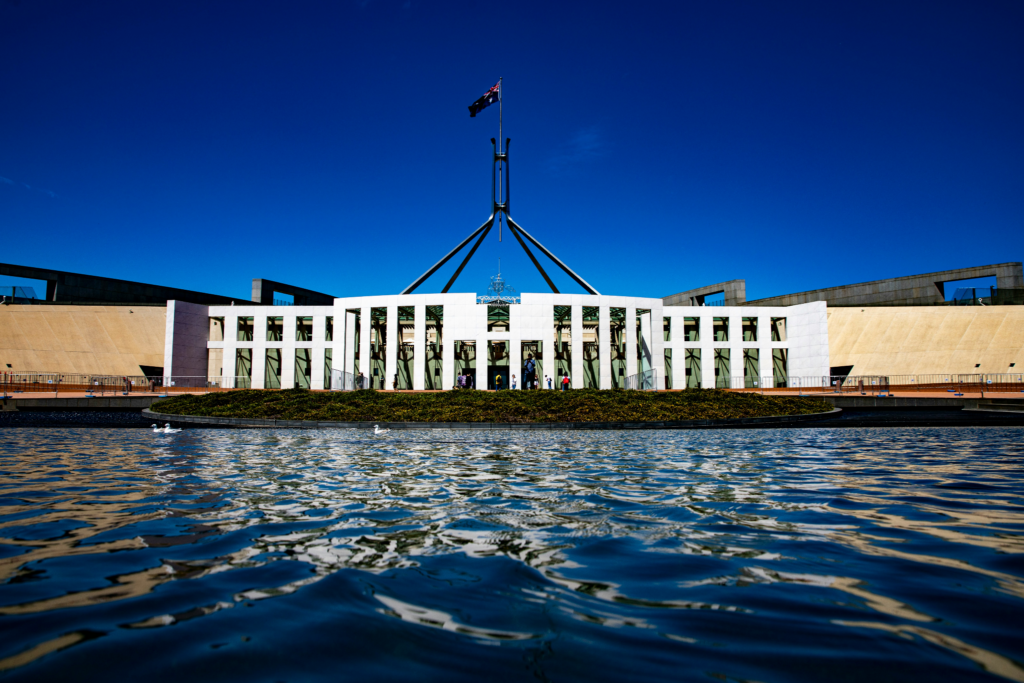
The 2026 Federal Budget is a story of broken promises and big bets. The Labor government went where it said it wouldn’t in the last election just 12 months ago, scrapping the 50 per cent capital gains tax discount, winding back negative gearing on existing properties, and imposing a 30 per cent minimum tax on discretionary trusts.
The dominant mood from stakeholders? Split right down the middle. Unions and social services groups cheered what they called a once-in-a-generation rebalancing of the tax system. Business groups, property investors, and the Coalition called it a betrayal that will scare investment offshore.
Behind the tax headlines, the Budget committed an additional $14 billion over the next four years and $53 billion over the decade to defence, $25 billion in extra public hospital funding, $14.8 billion for fuel security, and $2 billion for housing enabling infrastructure. But the cuts were deep, in particular the $37 billion savings from the NDIS.
For many, this is a budget of trade-offs: young homebuyers gaining ground, while older Australians and people with disability are left anxious about what comes next.
Independent Senator David Pocock’s initial reaction to the Budget commended the Treasurer on many elements, however Pocock noted changes to gas company taxes were sorely missing.
Senator Pocock said many Australians will be looking at the Government’s Budget and wondering why it didn’t put their best interests ahead. “When you read through the budget papers, clearly, it sucks to be poor, it sucks to be old, and it sucks to be a native species. And we have to make sure the Australian Government is spending its money on the priorities the Australian people want”.
| Defence spending | $14 billion over the next four years and $53 billion over the decade, along with other measures, brings total funding in the portfolio to $887 billion to 2035-36 |
| NDIS savings | $37 billion in cuts |
| Public hospital funding | $25 billion additional |
| Fuel resilience package | $14.8 billion |
| Housing infrastructure | $2 billion for 65,000 homes |
| Working Australians Tax Offset | $250 per worker |
The headline reforms in this budget are all about tax. The government replaced the 50 per cent Capital Gains Tax (CGT) discount with an inflation-indexation model capped at 30 per cent. They went further – restricting negative gearing to new builds (limited to two properties), and imposing a 30 per cent minimum tax on discretionary trust distributions.
Dubbed as ‘once in a lifetime’, tax reform proposals include the introduction of a permanent $250 Working Australians Tax Offset, and cuts to the low-income marginal rate from 16 to 15 per cent (dropping to 14 per cent in July 2027). These CGT and negative gearing changes are forecast to raise $3.6 billion in their first two years.
The Australian Council of Trade Unions (ACTU) welcomed the measures as a generational rebalancing. ACTU President Michele O’Neil said this Budget was about fairness, giving workers a better shot at housing and ending a system that taxed work harder than wealth.
But the Australian Chamber of Commerce and Industry (ACCI) warned the changes would drive investment offshore. ACCI acting CEO, David Alexander said matching spending blowouts with tax hikes would lock in a slow-growth economy.
The Business Council of Australia (BCA) took a middle path, welcoming productivity measures but flagging concern about the CGT and negative gearing changes making Australia less competitive.
“Higher taxes will scare away investment in Australian businesses and send this funding to more welcoming overseas jurisdictions,” said Mr Alexander.
Queensland Independent Senator Bob Katter called the low-income tax cut so small it “doesn’t even buy a beer” and accused the government of breaking its promise not to change CGT and negative gearing.
The Australian Industry Group’s, Innes Willox noted Australia now has among the highest CGT rates in the world, however Australian Council of Social Service (ACOSS) CEO Dr Cassandra Goldie broadly welcomed the tax reforms. Goldie did however criticise the $250 tax offset, saying it was ‘going to everyone in paid work while 4 million people on the lowest incomes; those on JobSeeker, Youth Allowance, the Disability Support Pension got nothing’.
Housing dominated the Budget narrative yet again. The CGT and negative gearing changes were framed as the government’s answer to the affordability crisis, backed by $2 billion in water, roads and sewage infrastructure to support 65,000 new homes over the next decade.
A $60 million National Youth Housing Supplement will unlock social housing for over 4,000 young people, fixing a long-standing “youth housing penalty”, making young tenants financially unviable for community housing providers.
Homelessness Australia CEO, Kate Colvin called it a hard-won win for young people failed by a system that catches them in crisis, yet never houses them. The Australian Community Housing sector’s Mark Degotardi said the Budget restores balance to a housing system long overdue for reform.
But others were sharply critical. Master Builders Australia CEO, Denita Wawn said the government’s own modelling showed the tax hike would reduce supply by 35,000 homes, and even with productivity measures adding 65,000, the net gain of 30,000 was nowhere near enough when Australia already falls short by around 200,000 homes. The Property Council’s Mike Zorbas called the tax changes a roll of the dice, warning the government must closely monitor investor behaviour.
“If the tax hike on property had not been introduced tonight, we would instead be up by over 100,000 homes over 10 years,” said Ms Wawn.
The Greens were scathing from the other direction, saying property investor tax perks were largely intact, with around 95 per cent of the benefit remaining, and no new money for public housing.
The budget proposed $25 billion in additional funding for public hospitals under the new National Health Reform Agreement and introduced a three-year-old health check through GPs, funded by Medicare.
But the Australian Medical Association (AMA) said the rest was thin. AMA President, Dr Danielle McMullen warned of a remaining funding gap of at least $9.6 billion in hospital funding and criticised the lack of broader Medicare modernisation.
“Urgent care centres and targeted bulk billing in certain geographic areas are not long-term solutions. We need to see true reform of Medicare,” Dr McMullen said.
The AMA also raised alarm over cuts to the private health insurance rebate for over-65s, warning it could force older Australians to drop or downgrade cover and pile extra pressure on public hospitals.
The Australian College of Nursing called for a national nursing workforce strategy, warning of a projected shortage of more than 70,000 nurses by 2035. The Royal Australian College of General Practitioners (RACGP) also welcomed the three-year-old health check and RSV vaccination funding but flagged disappointment with racism in the health system.
The Budget’s single biggest savings measure is a proposed $37 billion cut to the NDIS through tighter eligibility, stronger fraud controls, mandatory provider registration and a target of reducing participant numbers by 160,000 by 2030.
The Business Council of Australia supported the structural reforms as necessary to return the scheme to its original intent. The BCA commended the government’s “tough decisions” to make the National Disability Insurance Scheme (NDIS) more sustainable and expressed approval for the expected return to a budget surplus earlier than previously forecast, but disability advocates and welfare groups remain alarmed.
ACOSS CEO Dr Cassandra Goldie said people with disability were frightened about what the reforms mean and urged the government to keep them at the centre of any changes.
The Greens accused the government of cutting $37 billion from disability services to fund $53 billion in weapons spending, where Independent Bob Katter acknowledged the NDIS needed restructuring to tackle rorting, but said the measures targeted eligibility fraud while the bigger problem, rorting by scheme administrators, remains unaddressed.
“It is outrageous that fraudulent businesses have been created with the primary purpose of effectively thieving from, neglecting and defrauding some of the most vulnerable members of our society,” Mr Katter said.
As previously announced, the government is proposing commitments of $425 billion to defence over the next decade, targeting 3 per cent of GDP by 2034. This is a proposed increase of $14 billion over the next four years, and $53 billion across the decade.
Spending targets include accelerating nuclear submarines and surface ships under AUKUS, expanding long-range strike capabilities, and boosting uncrewed systems. Bob Katter welcomed the spending direction but said it failed to shore up foundations, calling for action to regain control of strategic assets like ports and airfields and to increase the number of combat-ready civilians.
Energy policy drew some of the sharpest reactions. The government committed $14.8 billion to a Strengthening Australia’s Fuel Resilience package and $10 billion to extend domestic fuel stockpiles.
The ACTU welcomed these as job-saving measures. But the Climate Council slammed the government for the proposed $19 billion in annual fossil fuel subsidies and for forgoing gas export tax revenue, calling it a massive free kick for fossil fuel corporations.
“This Budget maintains the $19 billion gravy train for big fossil fuel corporations,” said Climate Council CEO Amanda McKenzie.
The Australian Conservation Foundation (ACF) claimed seven times more funding was being spent on initiatives that damage nature and climate than protect it. Both the Climate Council and ACF criticised the government for failing to impose a 25 per cent tax on gas exports, which they estimated could raise $17 billion annually.
Small business had some wins: the $20,000 instant asset write-off was made permanent, and companies under $1 billion turnover can now carry back tax losses against tax paid up to two years earlier (at a budget cost of $2.3 billion over three years).
ACCI welcomed both measures. But the 30 per cent minimum tax on trust distributions alarmed the sector. ACCI’s David Alexander warned the trust tax would damage business operations and productivity due to management having their pay permanently cut by the government. Trusts are commonly used by small businesses to protect assets and ensure continuity.
Education seemed a lower priority in this year’s Budget. The Greens’ Senator Faruqi rallied with the National Union of Students to demand the reversal of job-ready graduates’ fee hikes that have produced $52,000 arts degrees.
The Student’s Union National President Felix Hughes said the words “student” and “university” were not mentioned once in the Treasurer’s speech. The Australian Education Union welcomed the housing commitments that could help teachers locked out of the areas where they teach, but flagged concern about $472 million in savings to disability funding.
“Budgets are about priorities and young people will look at this budget and wonder if they are a priority at all,” said Felix Hughes, NUS National President.
The government reclassified personal care as clinical care in aged care, removing co-contributions for services like showering and mobility assistance.
Uniting Care welcomed the $3 billion investment but said it wasn’t enough for high-quality residential aged care. Council of the Ageing’s Patricia Sparrow noted no new home care packages were announced in the Budget, despite older people waiting up to a year for support.
Sparrow also raised alarm about the private health insurance rebate changes hitting 2.6 million older Australians. National Seniors’ Chris Grice said older Australians were already contacting them, unhappy about the insurance changes, and questioned how a 30 per cent minimum tax on shares helps create affordable housing.
The R&D tax incentive threshold was raised from $150 million to $200 million, and the refundable offset was lifted from $20 million to $50 million, and CSIRO received a $387 million funding boost.
The Australian Academy of Technological Sciences and Engineering welcomed the investment in publicly funded research agencies. But Science & Technology Australia’s Ryan Winn warned the sector had alost $1.5 billion in research funding, including $800 million from the Australian Economic Accelerator program, making the research landscape much leaner.
The $2 billion housing-enabling infrastructure fund was the main infrastructure announcement. Civil Contractors Federation CEO Nicholas Proud welcomed the direct connection between infrastructure and housing as the missing piece.
Big-ticket items include $3.8 billion for Melbourne Rail and $50 million for Sydney-Canberra rail. Bob Katter slammed the regional infrastructure spend as ridiculously low, demanding funding for North Queensland projects.
The tourism sector was hit by a $10 increase in the passenger movement charge (from $70 to $80), which Tourism and Transport Forum CEO Margy Osmond called a shocker, generating over a billion dollars over the forward estimates.
This Budget includes reforms to employment services, which ACOSS said it hoped would transform a system that has treated low-income people shockingly for far too long. Skills recognition for overseas qualifications was welcomed as a productivity measure.
But the Electrical Trades Union’s Michael Wright warned that despite record investment in vocational education, electrical apprenticeship commencements have fallen every year since 2022, with a forecast shortfall of 40,000 electricians by 2030.
ACOSS CEO Dr Cassandra Goldie gave the Budget’s starkest welfare critique: 4 million people on the lowest incomes – on JobSeeker, Youth Allowance, Disability Support Pension, or the Age Pension – got no cost-of-living relief.
The remote area allowance, at $9 per week, has not increased in 25 years. The government’s own Economic Inclusion Advisory Committee has recommended fixing income support adequacy four years in a row, and four years in a row those people have been left waiting.
The Parenthood’s Georgie Dent called the Budget a missed opportunity for families with young children. There was no expansion of paid parental leave and no clarity on the future of the 15 per cent early childhood educator wage increase set to expire.
With 260,000 educators unsure whether their wages will go backwards and 1.4 million families paying childcare as their second-highest household expense, Dent said parents needed answers immediately.
The CPSU said overall Australian Public Services sector staffing levels were maintained, but job cuts already underway at the Department of Health, Home Affairs, and Social Services would continue.
The union welcomed a $387 million CSIRO funding boost and continued funding for nearly 4,000 frontline Services Australia staff but criticised $3.7 billion spent on contractors and consultants while trained public servants lose their jobs.
This is a Budget that will be dissected for months to come. The government has taken a clear political gamble, hoping that Australians care more about housing affordability and tax fairness than they do about investment incentives and keeping promises.
The dominant narrative from our analysis of stakeholder reaction is ‘broken promises’ versus ‘long overdue reform’, and which framing wins depends heavily on whether house prices actually begin to ease.
For communicators and PR professionals, the biggest story to watch is the investor response. The Property Council, Master Builders and the Financial Services Council have all flagged they will commission independent modelling of the supply impact.
We will no doubt continue to hear about the impacts of the NDIS cuts, with $37 billion in savings and 160,000 participants potentially losing access, the disability sector will mobilise. This will become a rolling story as implementation details emerge.
Meanwhile, the silence on income support, nothing for JobSeeker, nothing for the remote area allowance, leaves Labor exposed to the criticism that its cost-of-living relief leaves some large big gaps.
Lastly, the health insurance “rebate cut”. Over three million older Australians have just been told they will pay more for cover. That is a large, politically engaged demographic.
Expect aged care, seniors’ advocacy, and private healthcare groups to run hard on this in the weeks ahead. And the veterans’ cuts, $780 million stripped from allied health could turn into a longer-burning issue, especially with a Royal Commission into Defence and Veteran Suicide still fresh in public memory.
The reactions will keep rolling in over the coming days as sectors digest the detail, and the opposition delivers its budget reply. Watch this space for the latest stories and perspectives around the Budget, and in the coming weeks as Senate Estimates begins.
If you’re interested in how Isentia can support you with media and parliamentary monitoring, fill out the form below and we will be in touch.

Content Marketing Executive, APAC
Nikita Gundala manages brand marketing and thought leadership for Pulsar Group across the SEA and ANZ markets. With over three years of first-hand experience in the influencer marketing and PR industries, she specializes in translating real-time insights and audience intelligence into actionable content. Nikita holds a master’s in Marketing and Digital from ESSEC Business School, Singapore. She has contributed to the wider industry conversation by co-authoring articles and reports for The Business Times Marketing Interactive.
Get in touch or request a demo.