Blog
How do different LLMs represent your organisation?
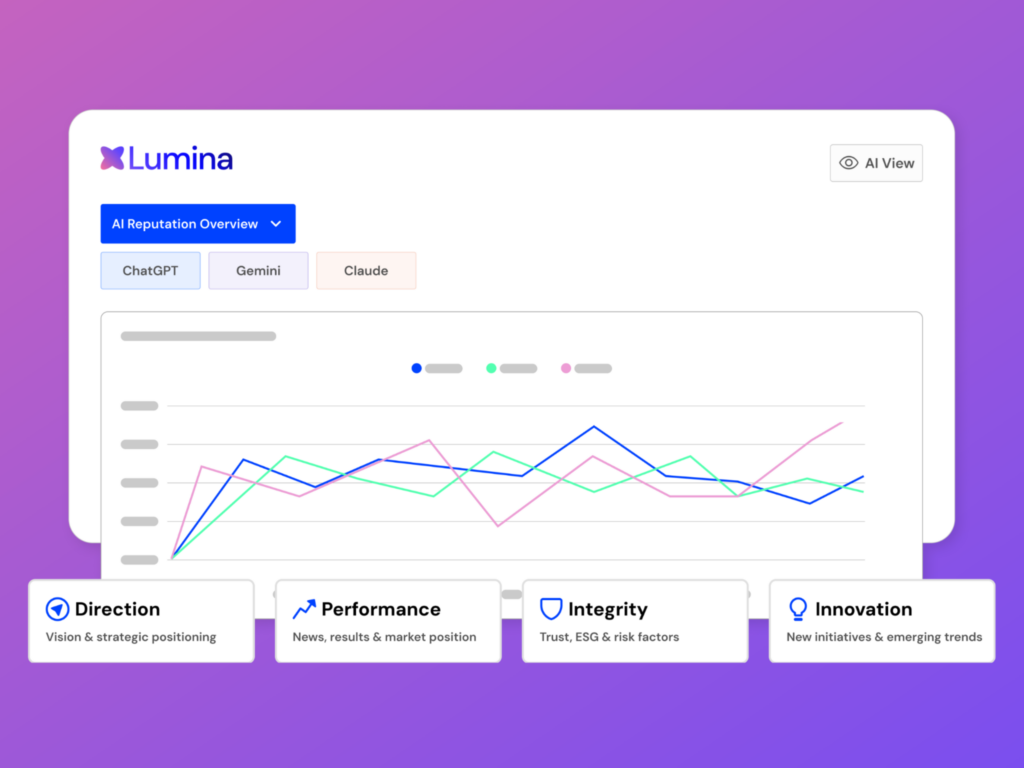
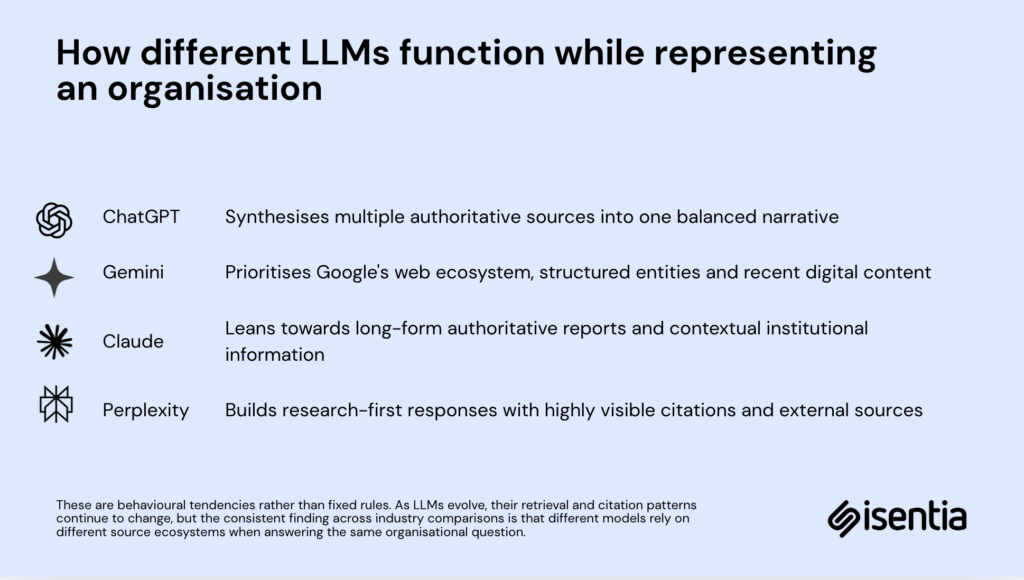
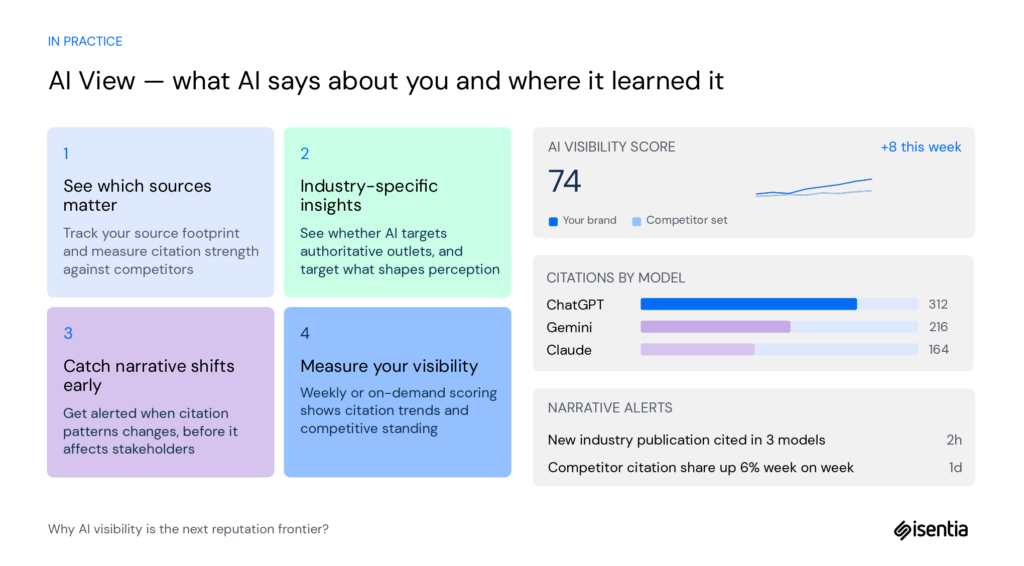
Uncover how different LLMs treat your brand, explore key model capabilities, and learn how PR teams can measure and shape AI visibility.
TL;DR
Government communications teams have a lower tolerance for AI mistakes than almost any other sector. A misclassified sentiment score that quietly skews a corporate brand tracker is a minor annoyance; the same error feeding a ministerial briefing, an election communications unit or a public health crisis response can shape a decision with real consequences. That is the backdrop against which public sector teams across Australia, New Zealand and Southeast Asia are now adopting AI for media monitoring, and it explains why adoption looks less like a single trend and more like several regional patterns converging on the same guardrails.
This piece draws on Isentia’s long-running government and public-sector media intelligence work across the region, more than 200 public sector clients globally and 24 global AMEC awards by the company’s own count, alongside publicly available government AI policy in Australia and Isentia’s own Southeast Asian government engagements, to set out how AI is actually being adopted for government media monitoring today, market by market.
In This Article
Three forces shape how any government communications team adopts AI for media monitoring: formal policy (does a whole-of-government AI framework exist and what does it require), procurement maturity (how established is the vendor relationship and how much trust has it earned), and regulatory obligation (what data protection rules govern how monitoring content can be sourced and stored). Australia, New Zealand and Southeast Asia sit in different positions on all three, which is why “AI adoption in government” is not one story but several running in parallel.
Australia’s public sector is formalising AI adoption faster than most peer markets. Under the Australian Public Service’s AI Plan, every non-corporate Commonwealth entity must appoint a senior Chief AI Officer by 30 June 2026 to lead strategic AI adoption, separate from the existing Accountable Official role that handles governance and risk. The Digital Transformation Agency’s Policy for the Responsible Use of AI in Government introduced new mandatory use-case governance requirements from 15 June 2026, with the remainder taking effect by December 2026, and mandatory foundational AI training now applies across the entire Australian Public Service.
Adoption on the ground is already running ahead of some of that formal governance. One industry survey of 500 Australian public sector workers found 70% now report AI integrated into their daily tasks, up from 58% a year earlier, though researchers caution that much of this adoption remains fragmented, standalone chatbots and copilots bolted onto existing workflows rather than integrated into core communications and monitoring systems. For government comms teams specifically, that fragmentation is exactly the gap a purpose-built media intelligence platform is designed to close: AI that works inside a single monitoring and reporting workflow, with a clear audit trail, rather than a disconnected point solution.
For federal budget communications specifically, see how Isentia’s Lumina suite tracked Federal Budget 2026 stories and perspectives as the narrative developed in real time across Australian media.
New Zealand’s public sector market is smaller and more relationship-driven than Australia’s, and AI adoption for media monitoring reflects that. Rather than a single sweeping mandate, agencies work within the Public Service AI Framework and lean on long-standing vendor partnerships and professional bodies, including the Public Relations Institute of New Zealand, to evaluate new AI capability before adopting it. Isentia’s own AI-supported monitoring and Insights reporting, built on the same underlying technology used across its Australian and Southeast Asian government work, is positioned in this market on the strength of that track record rather than a compliance mandate, since New Zealand public sector buyers weigh continuity of service and account management as heavily as the AI feature set itself.
The practical implication for New Zealand public sector comms teams considering AI-assisted monitoring is to ask vendors for evidence, not just capability. A platform that can point to comparable government engagements, transparent methodology, and analysts who understand the New Zealand media and political context earns trust faster than one leading only with a features list.
Across Southeast Asia, government adoption of AI for media monitoring is shaped less by a single unifying policy and more by a combination of data-protection regulation and demonstrated proof of capability in genuinely difficult conditions: multiple official languages, politically sensitive coverage, and the need for daily, ministerial-grade intelligence. Isentia’s own government work in the region is built around that requirement: an AI-powered Insights Chatbot that lets non-technical staff query live coverage and reports in plain language, customised risk alerts tuned to an agency’s own issues and stakeholders and delivered by email or WhatsApp, audio briefings that condense a day’s coverage for senior officials on the move, and dashboards and specialist panels configured by topic, stakeholder or issue rather than a one-size-fits-all view. Access is role-based and audited, which matters as much as the AI itself once a platform is feeding ministerial decision-making.
Regulatory context increasingly shapes how this monitoring can be sourced. In Singapore, the Personal Data Protection Act provides a specific, narrow exemption for analysing publicly available data, which is the legal basis underpinning government-grade social listening; see why that exemption is not a free pass and how Singapore’s public sector uses social listening for policy feedback. Indonesia’s PDP law creates comparable obligations; see what Indonesia’s PDP law means for social listening buyers in 2026. In disaster-prone markets like the Philippines, AI-supported monitoring has a more operational role: social listening for disaster preparedness in the Philippines shows how real-time alerts and crisis monitoring directly support public safety communication.
Isentia is also able to draw on social listening technology from Pulsar, its sister company under Pulsar Group, when a government brief calls for deeper social conversation analysis alongside Isentia’s own traditional and broadcast coverage. Pulsar is well regarded for its social listening depth and its visual, easy-to-read data exploration tools, but for government work it sits alongside, rather than in place of, Isentia’s own regional licensed content, local-language analyst teams and government-specific reporting methodology, which is what turns a raw signal into a briefing a minister can act on.
The table below summarises the dominant adoption pattern in each market. These are directional characterisations rather than precise rankings, since AI maturity varies significantly by individual agency within every market.
| Market | Dominant adoption driver | Formal AI policy maturity | Primary monitoring use case | What buyers ask for first |
|---|---|---|---|---|
| Australia | Whole-of-government policy mandate | High ✓ | Policy and budget narrative tracking | Auditable governance, use-case risk assessment |
| New Zealand | Vendor trust and continuity | Medium | Daily media monitoring and account support | Track record, dedicated account management |
| Southeast Asia | Regulatory obligation + demonstrated proof | Medium | Multilingual crisis and narrative monitoring | Licensed sourcing, native-language accuracy |
One thing government buyers across all three markets tend to ask about once they get into vendor evaluation is historical depth, since a ministerial team needs to compare “how did we handle this last time” against real archives, not a demo window. It’s worth checking this line by line: some global platforms, Talkwalker among them, offer a default lookback of only around 30 days on their standard search, with longer historical pulls, sometimes several years, available as a separate paid add-on. For a government team that needs a defensible multi-year record on demand, that distinction between “included” and “available at extra cost” is worth confirming upfront rather than discovering during a live briefing.
Across Australia, New Zealand and Southeast Asia, government buyers are ultimately evaluating the same thing: whether a vendor’s AI is backed by enough regional depth and process maturity to be trusted with a decision that matters. Isentia’s approach to that is built on a few specific things rather than a features list. Coverage and interpretation are handled by local, in-region analyst teams who understand the political and media context of each market they work in, not a single global desk. Query setup and adaptive keyword tuning are handled by specialists working from a structured Boolean-generation process, which keeps monitoring accurate as a story or an agency’s issues evolve, rather than leaving that tuning to the client. Isentia’s crisis and risk-monitoring approach follows an established, repeatable framework rather than an ad hoc response, and onboarding for a new government engagement typically runs to around two weeks, from an initial brief through dashboard set-up, alert configuration and training.
On the compliance side, which matters more for government procurement than for most private-sector deals, Isentia (via Pulsar Group) holds ISO/IEC 27001, ISO/IEC 27017 and ISO/IEC 27018 certifications alongside ISO 9001, Cyber Essentials Plus, and alignment with GDPR and the EU AI Act, and the company’s government and public-sector work has been recognised through 24 global AMEC awards for measurement and evaluation practice. None of that replaces human judgment on a genuinely sensitive story, but it’s the kind of evidence a procurement team can actually verify, rather than take on faith.
Regardless of market, the government comms teams furthest along with AI-assisted monitoring tend to insist on the same four things, which map closely to Isentia’s own AI governance framework and to the EU AI Act’s requirements, now a practical benchmark even in markets that have not formally adopted it:
For a broader look at how AI is reshaping communications leadership more generally, see AI tools for PR (2026) and media intelligence vs media monitoring in APAC for the underlying distinction this piece builds on.
Most commonly for real-time sentiment and narrative tracking, crisis and disinformation detection, and drafting media summaries for human review, always with an analyst oversight layer given the stakes of government decision-making. Adoption patterns differ by market: Australia leans on formal policy, New Zealand on vendor trust, and Southeast Asia on regulatory compliance and demonstrated proof.
Under the Australian Public Service’s AI Plan, every non-corporate Commonwealth entity must appoint a senior Chief AI Officer by 30 June 2026 to lead strategic AI adoption and capability building, distinct from the Accountable Official role responsible for governance and risk. For comms teams, it means AI-assisted monitoring tools now need to fit inside a formal, agency-level AI strategy rather than being adopted ad hoc.
It can be, provided the platform builds in transparency, human oversight, bias mitigation and accountability as standard, not as an afterthought. The safest deployments treat AI as augmentation, handling volume-intensive pattern-matching, while human analysts retain responsibility for interpretation and any output that will inform a real decision.
Laws like Singapore’s PDPA and Indonesia’s PDP Law provide narrow, specific bases for analysing publicly available data, and “publicly available” is not the same as “free to use however you like.” Government buyers need monitoring vendors who can document exactly how content is sourced, retained and used, since the compliance bar for government data handling is typically higher than for private-sector monitoring.
Ask exactly how far back the platform’s standard search goes and whether a longer archive costs extra. Some global platforms default to a short lookback window, sometimes only around 30 days, with multi-year history sold as a separate add-on. For government comms teams, who regularly need to pull up how a similar story was handled previously, that detail is worth confirming during procurement rather than after go-live.
AI adoption in government media monitoring is real and accelerating across Australia, New Zealand and Southeast Asia, but it is not converging on a single playbook. What is converging is the standard government buyers hold AI to: transparent, human-overseen, auditable, and proven in comparable conditions. A demonstrated regional track record now counts for more than a longer feature list.
Talk to our public-sector team (AU / NZ / SEA).
Enquire and select your region → your message routes to the specialist covering your market.

Content Marketing Executive, APAC
Nikita Gundala manages brand marketing and thought leadership for Pulsar Group across the SEA and ANZ markets. With over three years of first-hand experience in the influencer marketing and PR industries, she specializes in translating real-time insights and audience intelligence into actionable content. Nikita holds a master’s in Marketing and Digital from ESSEC Business School, Singapore. She has contributed to the wider industry conversation by co-authoring articles and reports for The Business Times Marketing Interactive.
Uncover how different LLMs treat your brand, explore key model capabilities, and learn how PR teams can measure and shape AI visibility.
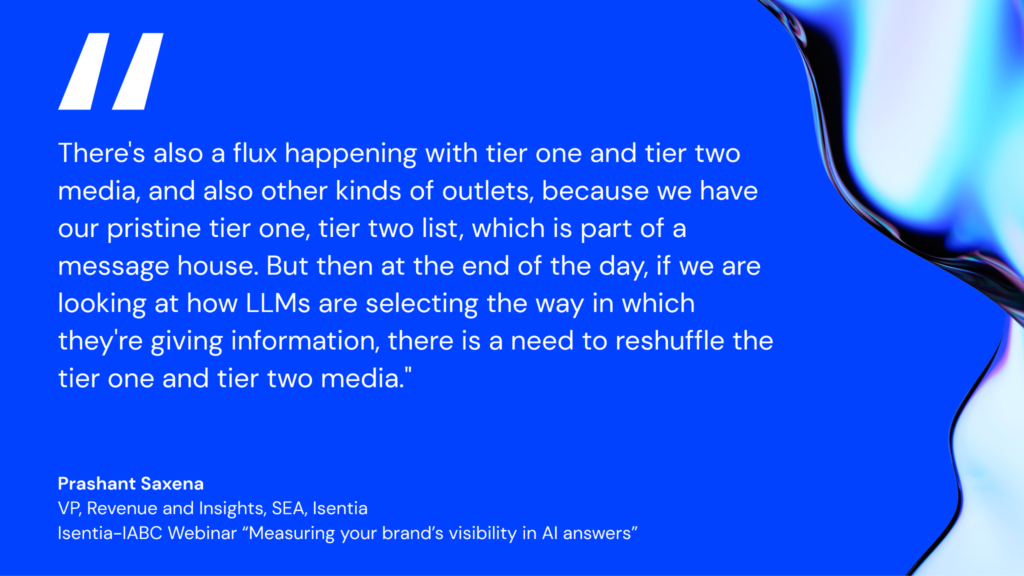
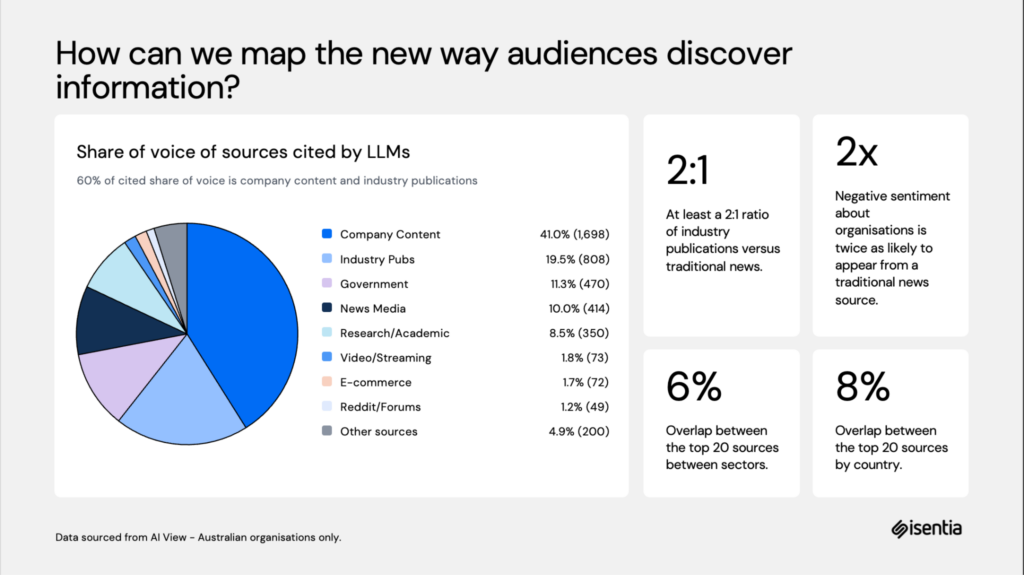
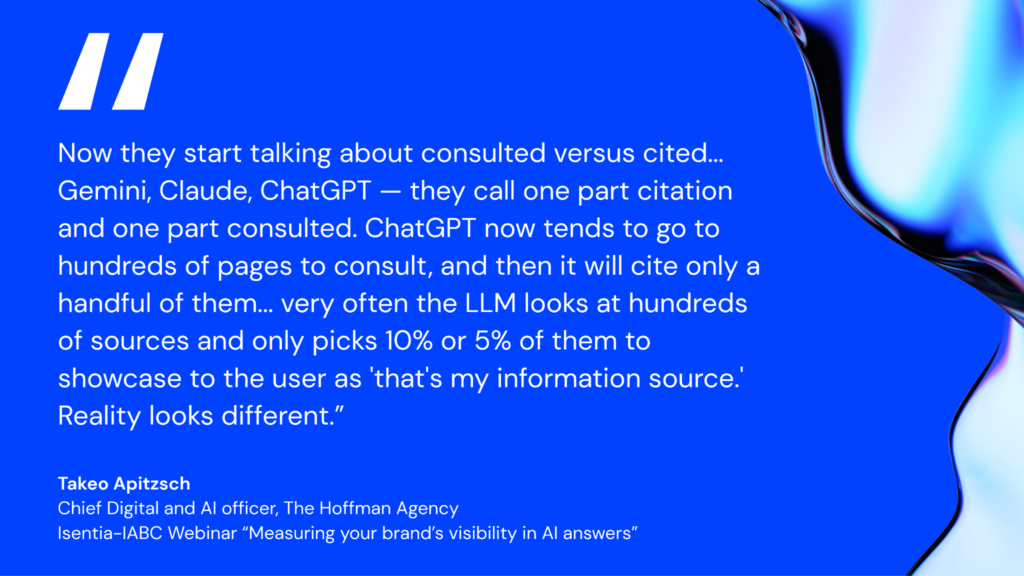
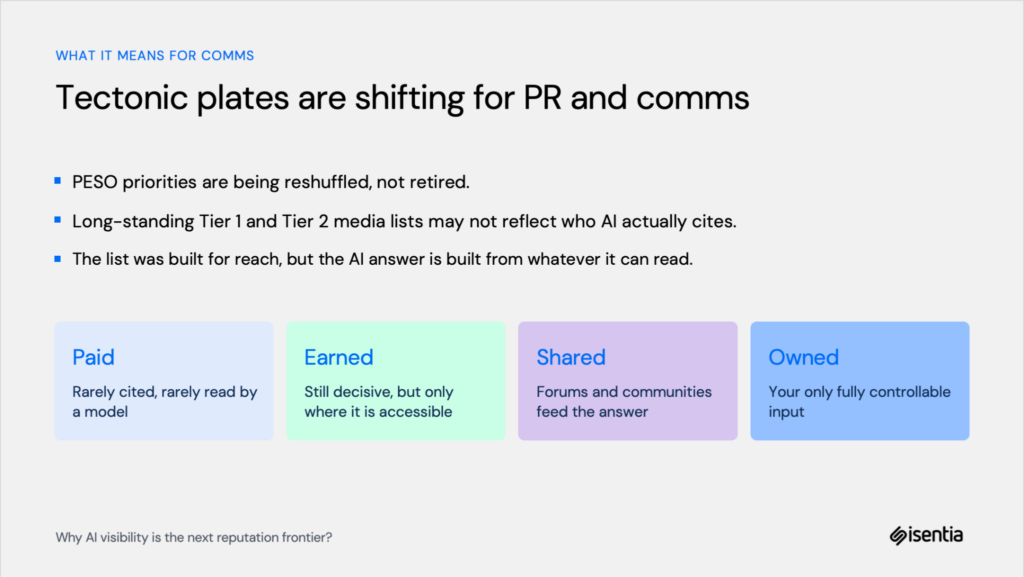
The hierarchy that exists between Tier 1 & 2 publications today is being challenged. AI models are the new way audiences discover information requiring organisations to rethink how they show up to remain visible in an AI-mediated environment.
Get in touch or request a demo.