Blog
How do different LLMs represent your organisation?
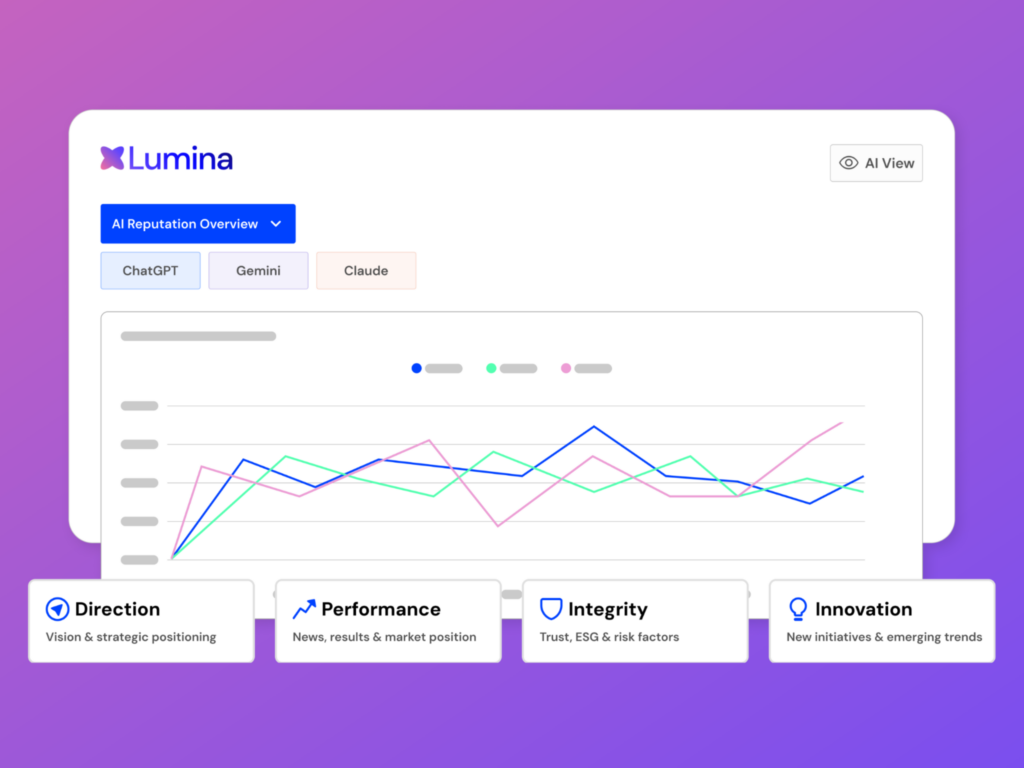
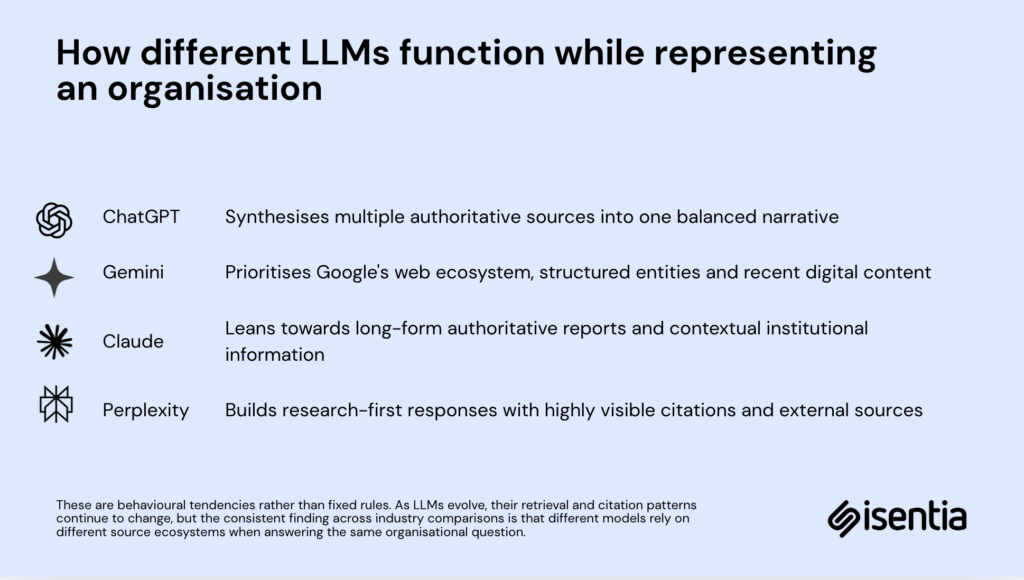
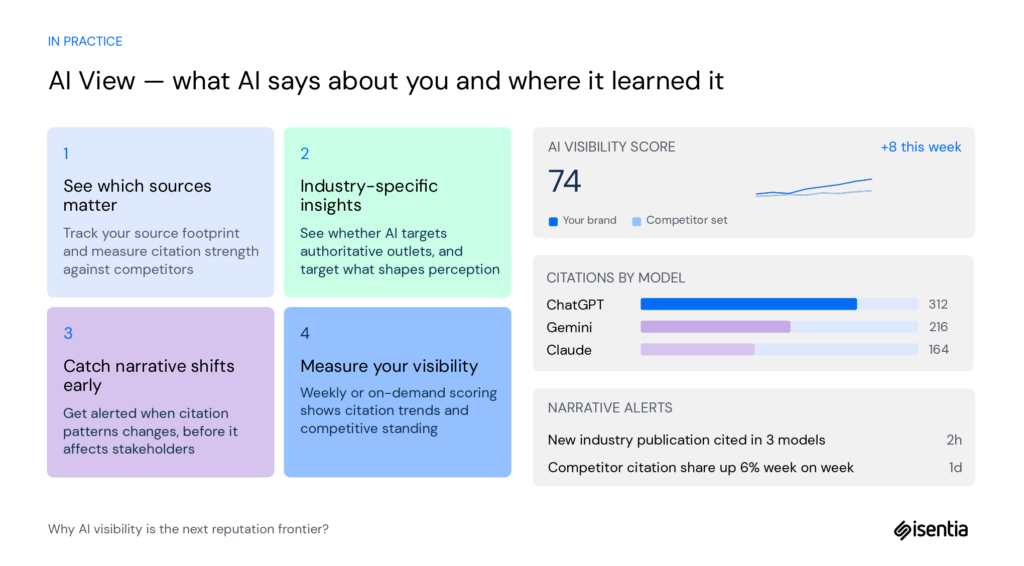
Uncover how different LLMs treat your brand, explore key model capabilities, and learn how PR teams can measure and shape AI visibility.
TL;DR
Singapore government agencies operate in one of the world’s most media-literate, digitally connected environments. When a policy announcement lands, public reaction surfaces within minutes across national newspapers, broadcast segments, forum threads, and social platforms in English, Mandarin, Malay, and Tamil. The communications teams responsible for tracking that reaction need more than a daily press clipping — they need real-time intelligence, with AI-assisted analysis, that stands up to the compliance requirements of public-sector procurement.
This article explains how Singapore government and public sector communications teams approach media monitoring in 2026: what they need, which platforms are evaluated, and what separates the tools that win government contracts from those that don’t. It draws on Isentia’s direct experience serving public sector clients across Australia and New Zealand, where the operational and compliance demands closely mirror those of Singapore agencies.
In This Article
Public sector communications in Singapore involves a distinct set of pressures. Agencies such as the Ministry of Communications and Information, statutory boards, and public health bodies handle policy narratives that touch millions of people across a multilingual society. The monitoring platform they use has to perform across a wider brief than most corporate tools are designed for.
Singapore’s media landscape is genuinely multilingual. A government communications team tracking reaction to a housing policy, for example, needs to monitor The Straits Times alongside Lianhe Zaobao, Berita Harian, and Tamil Murasu — plus broadcast clips, online forums like HardwareZone and Reddit Singapore, and social platforms. Tools that deliver English-only coverage or that sample social data miss significant portions of the conversation. Understanding the difference between media intelligence and media monitoring in an APAC context is essential before procurement teams begin evaluating vendors.
Senior agency leaders typically start the day with a structured briefing — not a raw keyword feed. The expectation in 2026 is that this briefing is AI-generated, curated by a human analyst, and structured around the narratives that matter rather than the volume of mentions. Platforms that still require manual curation from a large analyst team are increasingly difficult to justify in government procurement cycles that prioritize efficiency.
Government communicators operate in an environment where a single social media post can spark a news cycle within the hour. Real-time alert systems — configured around keywords, sentiment spikes, and source tiers — are a baseline expectation. Singapore’s public sector has been an early adopter of social listening for policy feedback, and agencies now expect the same alerting infrastructure they use for social channels to extend to news and broadcast.
Government agencies operate across a broader media environment than most corporate PR teams. Print clippings from major dailies, broadcast monitoring of Channel 5, Channel 8, Suria, and Vasantham, and licensed reproduction rights for internal reports are all requirements that go beyond the standard social-listening subscription. Many market-focused tools don’t have this infrastructure for Singapore.
The table below scores the main platforms evaluated by Singapore government and public sector communications teams against the axes that matter in this context: local media coverage depth, multilingual AI analysis, compliance credentials, government track record, print and broadcast integration, and self-serve intelligence capability. Scores are Isentia’s editorial assessment; methodology is described below.
Methodology: Platforms were assessed against six criteria weighted equally. Coverage depth reflects licensed Singapore local media sources including print, broadcast, and online. Multilingual AI refers to native-language sentiment and entity extraction (not machine translation of English results). Compliance credentials cover PDPA alignment, data residency options, and government-grade SLAs. Government track record reflects verified public-sector client references in APAC. Print and broadcast integration refers to owned or licensed clip delivery, not scrape-based aggregation. Self-serve intelligence refers to the ability for an agency team to configure dashboards, alerts, and reports without vendor intervention.
| Platform | SG Local Coverage | Multilingual AI | Compliance / Gov Credentials | Gov Track Record APAC | Print & Broadcast | Self-Serve Intelligence |
|---|---|---|---|---|---|---|
| Isentia | ✓ Strong | ✓ EN/ZH/MS/TA | ✓ APAC-focused; gov SLAs | ✓ AU/NZ agencies verified | ✓ Full print + broadcast | ✓ Lumina AI Suite |
| Meltwater | ~ Moderate | ~ EN primary; partial ZH | ~ Standard enterprise SLAs | ~ Corporate focus; limited gov | ~ Online focus; broadcast limited | ✓ Strong self-serve UI |
| Brandwatch | ~ Digital/social only | ~ EN-strong; SEA partial | ~ Global T&Cs; no APAC gov specialization | ✗ No documented APAC gov use | ✗ No print/broadcast | ✓ Strong social analytics |
| Talkwalker | ~ Moderate digital | ~ Global AI; SEA variable accuracy | ~ Standard; no specific gov credentials | ~ Limited APAC gov reference | ~ Broadcast via partners; not native | ✓ Dashboard customization |
| Truescope | ✓ SG-focused; strong local | ~ EN/ZH; developing TA/MS | ✓ Regional SLAs; SG data residency | ~ Emerging; AU/NZ roots | ✓ Print integration | ~ Standard reports |
| Sprinklr | ~ Social/digital focus | ✓ AI-strong; 50+ languages | ~ US-centric compliance framework | ~ Some gov (US/UK); APAC limited | ✗ Weak print/broadcast | ✓ Enterprise self-serve |
✓ = Strong / meets government standard ~ = Partial / adequate for some use cases ✗ = Gap or not supported. Isentia editorial assessment, June 2026.
AI capabilities are now a standard expectation rather than a differentiator at the feature level — but implementation quality varies significantly, and public sector teams have specific requirements that reveal those differences quickly.
Government agencies don’t just want a count of mentions about a policy — they want to understand how the narrative is developing. Are critics focusing on implementation costs? Is there a separate conversation emerging on social media that hasn’t reached mainstream news? AI-assisted narrative clustering surfaces these threads automatically, so communications teams can brief ministers on the full picture rather than the loudest signal. Media monitoring for government at this level requires AI that understands context, not just keywords.
For Singapore agencies, English-only sentiment analysis leaves a substantial gap. Mandarin coverage in Lianhe Zaobao carries editorial weight that shapes the Chinese-speaking community’s view of government policy. Malay-language coverage in Berita Harian and Tamil-language content in Tamil Murasu similarly reflect community responses that require native-language sentiment models — not translation-then-analysis pipelines, which introduce compounding accuracy errors. The methodology and evaluation standards for Asian-language NLP are worth understanding before selecting a vendor on this axis.
Agencies that previously required a team of analysts to produce a morning briefing now expect the platform’s AI to generate a structured first draft overnight, ready for human review and sign-off. Isentia’s Lumina AI Suite includes this capability — and the pattern mirrors what Isentia built for Australian government clients, where daily briefing automation reduced analyst time on repetitive compilation tasks and allowed the team to focus on interpretation and advisory work.
Keyword-based alert systems generate noise. AI-configured thresholds that factor in sentiment direction, source tier, and velocity of spread are meaningfully different — they surface genuine escalation events rather than every mention of a keyword. For public sector teams, this distinction matters: a mention of “transport disruption” in a community forum is different from the same phrase trending across multiple news outlets and social channels simultaneously. How public sector teams in the Philippines use social listening for crisis and disaster preparedness illustrates the operational model that Singapore agencies are now adopting.
Government procurement in Singapore applies a level of scrutiny to compliance credentials that goes well beyond standard enterprise agreements. Three requirements consistently appear in public sector RFPs and tender evaluations.
Singapore’s Personal Data Protection Act creates obligations for any platform handling personal data. Media monitoring platforms that scrape publicly available content still need to demonstrate that their data collection practices are lawful under the PDPA’s publicly available exemption — and that they understand where that exemption applies and where it doesn’t. The publicly available data exemption is not a blanket permission, and government legal teams are aware of this.
Government agencies routinely reproduce media clips in internal briefings, ministerial reports, and inter-agency communications. Doing so requires content licensing agreements — not just access to a monitoring dashboard. Platforms that provide access without the underlying licensing rights expose government clients to copyright liability. This is an area where established players with direct publisher relationships have a clear advantage over tools that aggregate unlicensed content.
Singapore government ICT security standards and the Government Instruction Manual (IM8) place requirements on where government data is stored and processed. Vendors seeking to serve classified or restricted-class agencies need to demonstrate data residency options within Singapore or compliant jurisdictions, and security credentials that satisfy the Government Technology Agency’s standards. Platforms headquartered outside APAC and operating on shared global infrastructure often struggle to meet these requirements without significant customization.
The right platform depends on what your agency primarily needs to do. Three buyer situations map to distinct platform profiles.
Agencies with a primary need for structured daily briefings covering Singapore’s print and broadcast media should prioritize platforms with licensed publisher relationships and a demonstrated briefing delivery model. Isentia’s daily briefing service, built on direct publisher licensing developed over years of serving AU/NZ government clients, is the strongest match in this category. The AU/NZ track record is a genuine proof point: Isentia has delivered daily briefings to public sector agencies in Australia and New Zealand where the operational expectations closely mirror Singapore’s requirements.
Agencies where social listening and online community monitoring is the primary focus — tracking forums, social platforms, and online news in near-real-time — have more platform options, but should still prioritize multilingual accuracy and PDPA-aligned data sourcing. A platform strong on social analytics but weak on print and licensed content will leave gaps in the intelligence picture that government communicators can’t afford. Consider whether the platform can grow with your needs as the brief expands.
Some agencies are specifically procuring platforms that reduce analyst dependency — tools their internal comms teams can configure and operate without a managed service layer. This is a legitimate and growing priority as government agencies invest in in-house intelligence capability. In this case, the Lumina AI Suite’s self-serve configuration — alerts, dashboards, narrative views, automated briefing drafts — is the relevant differentiator. Assess not just whether a platform offers self-serve features, but whether those features are genuinely usable by a non-technical comms team without dedicated training overhead. Lumina’s design for PR, comms, and public affairs teams reflects this priority directly.
Government communications teams that invest in AI-assisted media intelligence now are building institutional capability that compounds. The agencies that establish strong monitoring infrastructure during stable periods are the ones that respond fastest and most effectively when a crisis demands it.
— Isentia Editorial Team
Media intelligence for Singapore government agencies means tracking and analyzing coverage across print, broadcast, online, and social media channels in real time, with AI-assisted sentiment analysis, narrative clustering, and automated briefings. It goes beyond press clipping to give communications teams a structured, multilingual view of how public opinion is forming around government policy and announcements.
Singapore government agencies track public sentiment through licensed media monitoring platforms that cover local newspapers, broadcast outlets, online forums, and social channels across English, Mandarin, Malay, and Tamil. AI features — particularly sentiment scoring, alert systems, and narrative identification — are now standard in this workflow, with human analysts reviewing and contextualizing the AI-generated output before it reaches senior leadership.
Vendors bidding for Singapore government media monitoring contracts typically need to demonstrate PDPA-aligned data collection practices, licensed publisher agreements (not unlicensed scraping), data residency options that satisfy IM8 standards, and enterprise-grade security credentials. Some agencies also require local support and account management, and evidence of previous public sector deployment in APAC.
Isentia’s verified government track record is in Australia and New Zealand, where it serves public sector agencies with daily briefings, crisis monitoring, and media intelligence services that meet government procurement standards. The operational model and compliance requirements in AU/NZ closely mirror Singapore’s, making that experience directly relevant. Isentia is actively building its Singapore government client base from this foundation.
Social listening tracks publicly available content on social platforms and online forums. Full media monitoring adds licensed print, broadcast, and newswire coverage — the channels that still carry the most editorial weight in Singapore’s media environment. Government agencies typically need both, integrated in a single platform with consistent AI analysis across all source types, rather than separate tools for different channels.
Singapore’s government communications environment is demanding, multilingual, and increasingly AI-assisted. The platforms that serve it well are those that combine licensed local media coverage, native-language AI analysis, proven compliance credentials, and the operational infrastructure to deliver structured intelligence — not just data — to senior communicators.
Isentia’s AU/NZ public sector track record represents genuine, verifiable proof of this model in operation. The agencies that have relied on Isentia for daily briefings, crisis alerting, and media impact reporting in Australia and New Zealand have done so under the same compliance pressures and operational expectations that Singapore government procurement applies. That experience is the foundation for Isentia’s engagement with Singapore’s public sector market.
Explore how Isentia’s Lumina AI Suite is designed for public affairs and government comms teams, or read about how media monitoring works for government at enterprise scale.
Talk to our public-sector team
Isentia works with government and public sector communications teams across APAC. Speak with a specialist about your agency’s requirements, compliance needs, and the right coverage configuration for Singapore’s media landscape.
Enquire now
Content Marketing Executive, APAC
Nikita Gundala manages brand marketing and thought leadership for Pulsar Group across the SEA and ANZ markets. With over three years of first-hand experience in the influencer marketing and PR industries, she specializes in translating real-time insights and audience intelligence into actionable content. Nikita holds a master’s in Marketing and Digital from ESSEC Business School, Singapore. She has contributed to the wider industry conversation by co-authoring articles and reports for The Business Times Marketing Interactive.
Uncover how different LLMs treat your brand, explore key model capabilities, and learn how PR teams can measure and shape AI visibility.
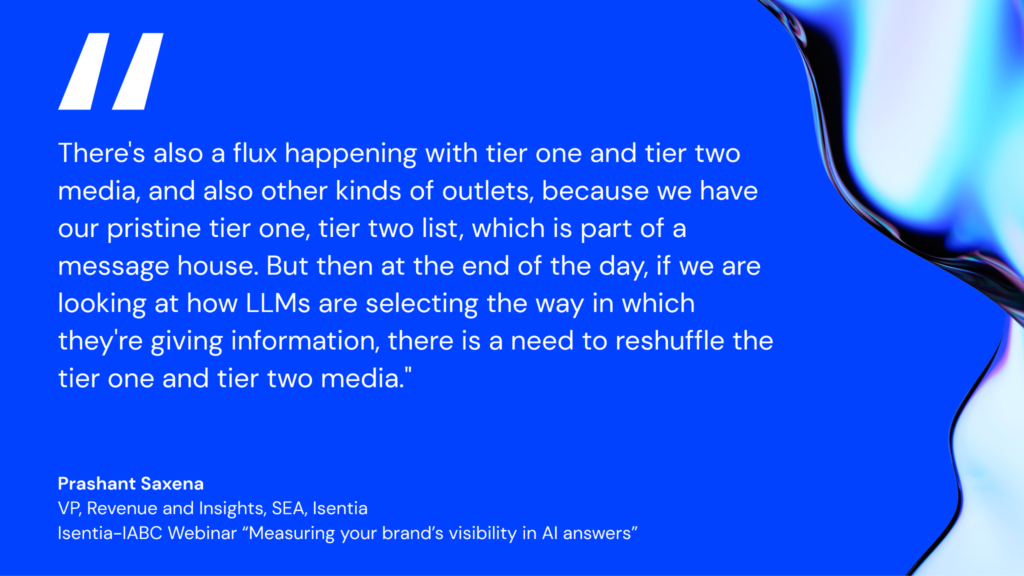
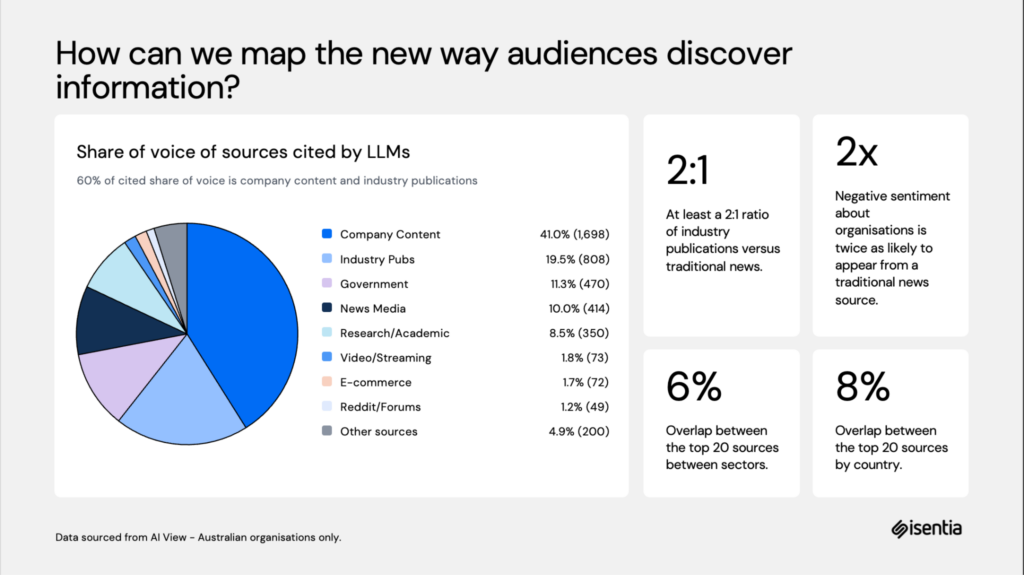
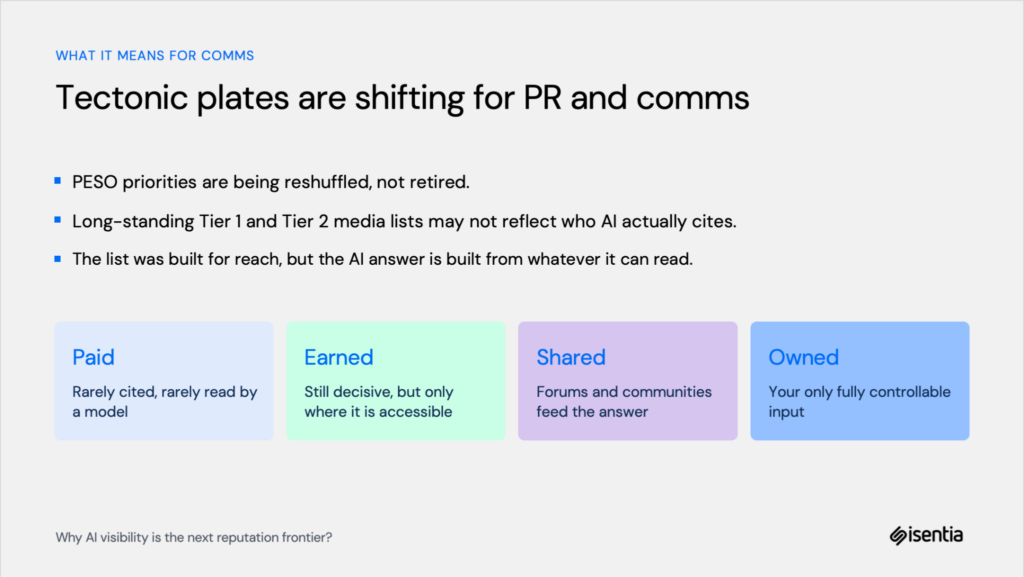
The hierarchy that exists between Tier 1 & 2 publications today is being challenged. AI models are the new way audiences discover information requiring organisations to rethink how they show up to remain visible in an AI-mediated environment.
Get in touch or request a demo.