Blog post
February 24, 2026From Media Monitoring to Media Intelligence: Why Insight, Context, and Interpretation Matter
Media monitoring is the reactive foundation of tracking brand mentions and keywords across print, broadcast, online, and social channels—the “what”. Media intelligence transcends this by applying context and interpretation to transform raw data into strategic insights—the “so what” and “now what”—enabling C-suite leaders to mitigate crises, shift brand strategy, and value real-world impact over simple volume.
Why is Media Monitoring no longer enough for Modern Communications?
The transition from traditional news collection to a robust media intelligence framework represents one of the most significant shifts in the history of professional communications. Historically, the industry relied on manual “clipping services,” a labor-intensive process where analysts literally cut articles from newspapers to provide a retrospective view of coverage. In that era, the primary goal was simply awareness—knowing that a mention occurred was considered a successful outcome for a PR team. However, as the media landscape has fragmented into a 24/7 digital stream encompassing millions of sources, the “clipping” mindset has become a liability rather than an asset.
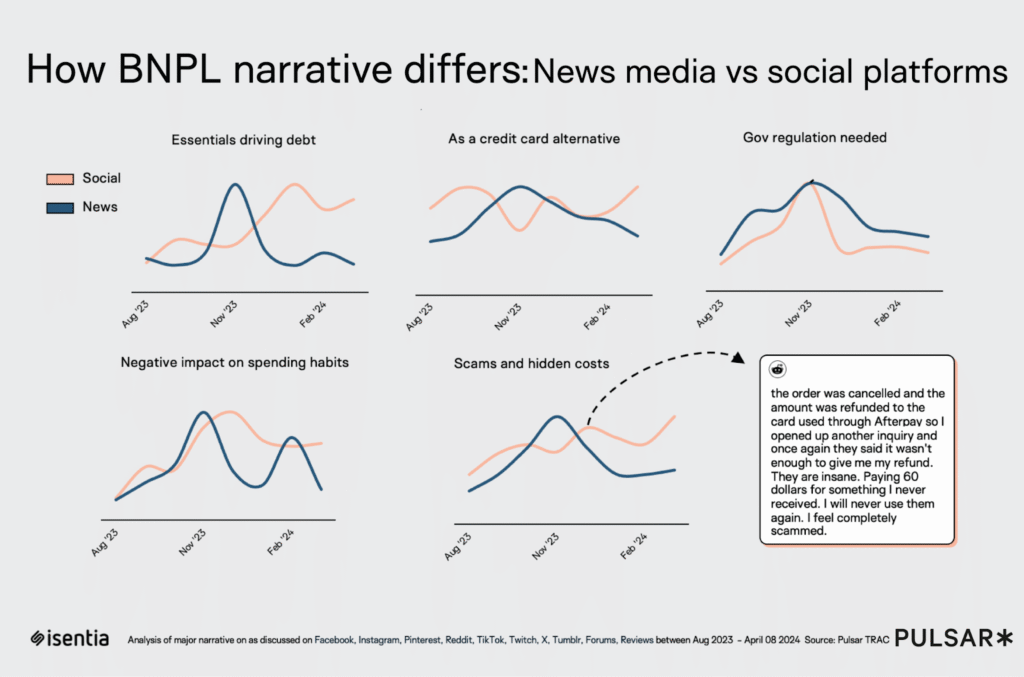
Today, organizations are faced with an overwhelming volume of data; Isentia’s platform alone scans more than 1.4 million online items daily and tracks nearly 2 million social blogs and forums. In this hyper-speed environment, 24/7 monitoring is merely the “entry fee” for participation in the market. Simply being aware of a mention does not provide the strategic foresight required to navigate a crisis or capitalize on a fleeting opportunity. The contemporary news cycle is characterized by the “pinball effect,” where stories no longer follow a linear path but bounce between social media, broadcast outlets, and private forums, often changing meaning and intent at every touchpoint.
This evolution is driven by the necessity of bridging the gap between data collection and strategic action. While traditional monitoring serves as a radar system, media intelligence acts as the navigation system, interpreting signals to determine the safest and most effective course of action. Without this layer of intelligence, communications teams are often left “counting clips” while failing to notice when a narrative has fundamentally shifted from a routine mention to a reputation-defining crisis. In the age of AI-generated content and synthetic media, the ability to discern intent and authority is no longer a luxury—it is a mandatory requirement for maintaining brand authenticity and public trust.
What constitutes the reactive foundation of Media Monitoring?
Media monitoring serves as the eyes and ears of an organization, providing a systematic way to track the presence of a brand, its competitors, and relevant industry topics across a vast array of channels. It is fundamentally reactive and tactical, focusing on real-time awareness and immediate alerts. For companies operating in the APAC media landscape, this foundation must be incredibly broad, encompassing not only mainstream digital news but also traditional print and broadcast media, which continue to hold significant influence in various regional markets.
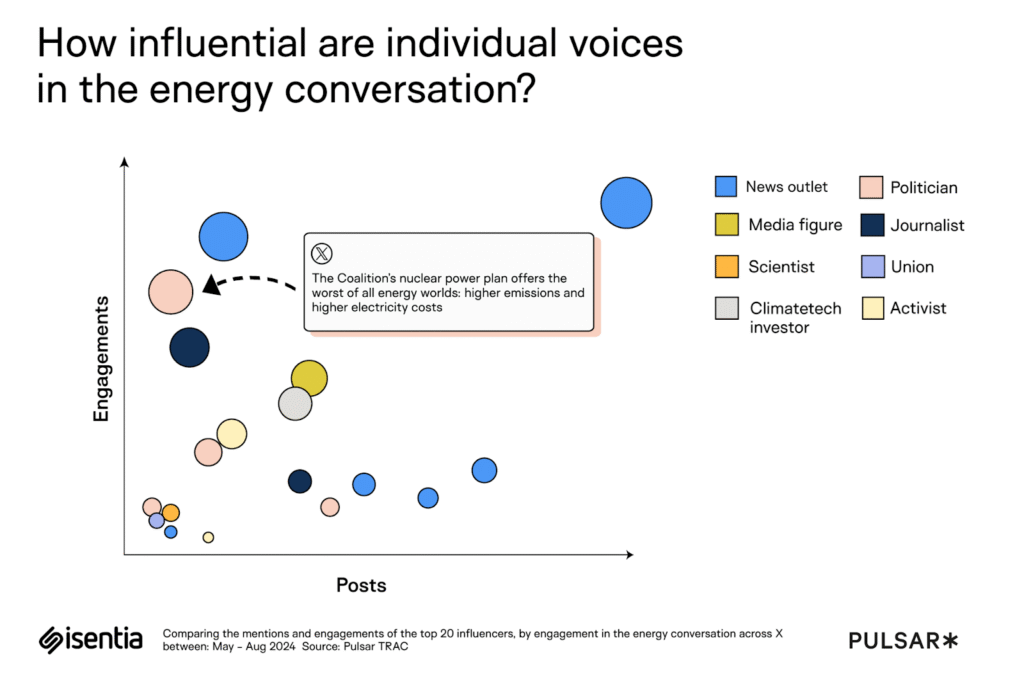
The technical infrastructure required to support this scale of monitoring is immense. Isentia utilizes Google Cloud and Kubernetes Engine to ensure its platform can scale to demand peaks 10 times greater than quiet periods, allowing for the reliable capture of high-bandwidth broadcast content. This includes real-time television and radio tracking powered by AI boundary detection services that identify when one news story ends and the next begins, isolating relevant segments for immediate client access. Furthermore, automated speech-to-text technology provides the bedrock for monitoring English-language broadcasts, with plans to expand these capabilities into dialects like Malay, Tagalog, and various Chinese languages to meet the sophisticated needs of the APAC market.
| Feature | Media Monitoring (Tactical) | Media Intelligence (Strategic) |
| Primary Objective | Listening and tracking mentions. | Transforming data into strategic advantage. |
| Focus Question | What is being said?. | So what does it mean for our strategy?. |
| Actionable Output | Real-time alerts and clip counts. | Decision-support for the C-suite and strategy shifts. |
| Temporal Nature | Reactive and immediate. | Proactive and long-term planning. |
| Key Technologies | Keyword tracking and automated feeds. | NLP, Sentiment Analysis, and Human interpretation. |
| Measurement Goal | Volume, Reach, and Share of Voice. | Impact, Reputation, and Behavioral outcomes. |
While monitoring provides the raw materials—the specific words used in a broadcast or a tweet—it lacks the depth to explain why those words matter. For example, a retail brand might use monitoring to identify 147 articles mentioning their product launch, but without the intelligent layer, they may miss that 80% of those articles were generated by low-authority synthetic news sites, or that a single mention in a trade publication was far more influential in driving buyer behavior. Monitoring provides the “What,” but it leaves the burden of interpretation entirely on the user, which can lead to significant blind spots during a rapidly evolving event.
Why is Context the Missing Link in Automated Media Data?
As organisations move from media monitoring to true media intelligence, context becomes the defining differentiator. Monitoring tools can efficiently capture mentions, track sentiment, and quantify reach. However, insight requires interpretation. Without contextual grounding, data remains descriptive rather than strategic.
Automated systems are highly effective at identifying patterns across news and social data. Yet they do not inherently understand irony, cultural nuance, political sensitivity, or the broader narrative environment in which coverage sits. This creates risk: technically correct outputs can still misrepresent intent, influence, or reputational impact.
Isentia addresses this gap through Lumina, which combines advanced analytics with experienced human analysis. By integrating machine-scale processing with editorial judgement, Lumina strengthens accuracy and ensures interpretation reflects real-world context.
This approach centres on three core dimensions: verifying credibility in an era shaped by misinformation, interpreting coverage within specific geographic and cultural environments, and assessing which voices genuinely influence public perception.
In short, monitoring captures what is being said. Media intelligence explains why it matters.
How does Media Intelligence drive C-Suite decision-making?
For senior leadership, the primary value of media intelligence lies in its ability to provide the “Now What”—the clear recommendations for strategic action. Unlike standard monitoring reports that may focus on “clip counts” or “mentions,” media intelligence reports are designed to drive C-suite decisions by linking media activity directly to business objectives. This allows leaders to move beyond a “gut feeling” and toward data-supported insights regarding everything from buyer behavior to competitive shifts in the market.
One of the most potent applications of media intelligence is in Reputation Management and Crisis Mitigation. While reputation is built over years, it can be decimated by a single mishandled event; having real-time oversight of all channels, including audio and broadcast, enables rapid context building and an optimal response delivery. Tools like Isentia’s Stories & Perspectives module allow leaders to catch the “pivot point” where a narrative shifts from a routine story to a reputational risk, or when a new key opinion former begins to guide the conversation. This predictive intelligence layer allows for “strategic change before the window of opportunity closes”.
| Pillar of Media Intelligence | Detailed Operational Goal | Strategic Impact for the C-Suite |
| 1. Comprehensive Monitoring | Systematic tracking across print, broadcast, online news, and social media platforms to ensure no signal is missed. | Provides a “full picture” of the media landscape, ensuring leaders are never blindsided by emerging threats. |
| 2. Real-Time Alerting | Utilizing AI-powered speech-to-text and boundary detection to provide instant updates on critical keywords. | Enables immediate response to crises, reducing the “time-to-action” during high-stakes reputational events. |
| 3. Contextual Analysis | Applying the “Human Compass” to filter noise and interpret intent, sarcasm, and cultural nuance. | Prevents “Authenticity Signal Poverty” by ensuring brand messaging is grounded in verifiable proof and cultural fit. |
| 4. Strategic Benchmarking | Comparing Share of Voice (SOV) and sentiment against competitors to determine market positioning. | Justifies budget allocation and proves the effectiveness of communication strategies through objective KPIs. |
| 5. Predictive Forecasting | Mapping narrative flow and influential voices to anticipate story momentum before it peaks. | Allows for proactive strategy shifts, enabling brands to occupy market gaps or mitigate risks before they go viral. |
The C-suite is increasingly expected to be the face of the brand, yet many leaders fall into the “corporate bot” syndrome—broadcasting messages rather than engaging with their audience. Media intelligence helps bridge this gap by identifying the values and “Behind-the-Scenes” content that actually resonate with audiences. By analyzing which narratives are actually being “listened to” rather than just “broadcast,” intelligence tools empower leaders to adopt a “daily ritual of authenticity,” shifting from generic company wins to sharing the “why” behind difficult decisions.
Why does regional nuance make automated-only monitoring fail in APAC?
The APAC Media Landscape is arguably the most complex in the world, characterized by extreme linguistic diversity and fragmented audience behaviors. From Manila to Sydney, media consumption habits differ wildly, and automated-only monitoring systems frequently fail because they cannot account for regional nuance. For example, the meaning of a social media post in “Hinglish” or “Tamil-English” often diverges from its surface-level interpretation, requiring specialized models that can handle multilingual sarcasm and code-switching.
In many Asian cultures, the “Place” and “People” aspects of the Three Ps are paramount. Brands must do more than make small gestures; they require “Cultural Anchoring” to build genuine trust. Automated sentiment analysis often misses the “shades of grey” in these markets, such as when a post is positive toward an organization but negative toward the industry at large, or when local jargon completely reverses the sentiment of a sentence. This is why automated-only monitoring is insufficient for the region; it lacks the “human intervention” required to separate legitimate signals from the noise of a diverse and rapidly changing data ecosystem.
Furthermore, the rise of synthetic media and virtual influencers in APAC, such as those seen during high-profile events like Wimbledon or local regional festivals, has complicated the verification process. Without a robust intelligence layer that evaluates the “Proof” and “Endorsement” of a source, brands in Asia-Pacific are vulnerable to misinformation that can spread via “crosstalk” and viral failures. For the APAC market, media intelligence is not just about tracking mentions; it is about understanding the “likely impact” of coverage on specific, culturally distinct communities to ensure messaging is both effective and safe.
What are the 5 Pillars of Media Intelligence?
To effectively transform data into strategy, organisations must adhere to these five pillars:
- Omni-channel Data Integration ensures that all media types, including print, broadcast, online news, and social media, are synthesised into a single source of truth. This integration is critical because modern stories travel a non-linear path, often starting on social forums and peaking in mainstream broadcast news. By tracking mentions from over 6 million sources in one place, teams can see the full story of their brand’s impact.
- Real-Time Agility and Alerting provides the necessary speed to manage reputation in the hyper-speed age of information sharing. Market-leading technology like AI boundary detection and real-time speech-to-text ensures that communications teams are always the first to know when a keyword is mentioned. This capability is the launchpad for crisis mitigation, allowing organisations to remain transparent and proactive during high-pressure events.
- Human-Centered Contextual Analysis utilizes the “Human Compass” to navigate the “Context Blindness” of automated AI systems. By filtering for intent, sarcasm, and cultural nuance, analysts provide the qualitative depth needed to move beyond “garbage in, garbage out” data. This pillar ensures that every metric is transparent and linked directly to the brand’s unique business objectives.
- Strategic Benchmarking and Share of Voice allows organizations to measure their communications performance against competitors and industry standards. By analyzing metrics such as the Media Impact Score—which considers tone, message traction, and spokesperson presence—teams can quantify the effectiveness of their strategy. This data-driven approach allows for the protection of budget decisions and the refinement of long-term positioning.
- Predictive Narrative Mapping identifies emerging trends and influential voices before they reach the mainstream consciousness. Tools like Isentia’s Lumina suite organize mentions into cohesive “Stories,” helping users anticipate shifts in public discourse. This proactive foresight allows brands to occupy market gaps, refine their story for target audiences, and prevent risks from escalating into full-scale crises.
What is the strategic role of Share of Voice (SOV) and Media Impact?
Share of Voice (SOV) and Share of Mind are fundamental metrics for benchmarking a brand’s presence in conversation relative to its competitors. However, media intelligence moves beyond simple volume-based SOV to focus on “Media Impact”. A brand might have the highest volume of mentions—the highest SOV—but if those mentions are largely negative or occur in low-authority channels, the impact on business objectives may be negligible or even detrimental.
Isentia’s Media Impact reports utilize a sophisticated methodology that scores coverage based on tone, message traction, and the likely behavioral impact on the target audience. This involves analyzing:
- Placement and Context: Evaluating where an item appears (e.g., front page vs. passing mention) and its likelihood of being seen by key stakeholders.
- Spokesperson Presence: Measuring how effectively an organization’s leaders are delivering key messages and shaping the narrative.
- Imagery and Tone: Assessing the emotional “vibe” of photos, videos, and illustrations that accompany the text, which often have a greater impact on sentiment than the words themselves.
- Source Authority: Identifying which journalists and outlets are the most influential in a specific sector, allowing for more targeted media relationship building.
By establishing these robust benchmarks, PR teams can move from “guessing” to “knowing” how their tactics influence the market. This allows for the “Qualifying at Scale” that has been a long-term ambition for the industry—the ability to combine large-scale quantitative data with the nuance of small-scale qualitative reviews.
How does Media Intelligence support Crisis Mitigation and Reputation?
Crisis management has been fundamentally altered by the speed of social media and the rise of synthetic content. In a crisis, the volume of media mentions can reach staggering levels—such as the 100,000+ mentions recorded during major data breaches—making it impossible for human teams to track everything manually. Media intelligence provides the “Predictive Intelligence Layer” needed to identify emerging risks before they go viral.
Effective crisis mitigation relies on being “Crisis Ready” through real-time analytics and alerts that help spot trends and take action before critical moments pass. During a high-stakes event, the “glossy” corporate narratives often fail; instead, leadership must rely on authenticity, transparency, and cultural anchoring to maintain public trust. Intelligence tools allow organizations to “Take notes of what is happening in the media and quickly facilitate actions to counter possible scrutiny”.
Reputation is not just about avoiding bad press; it is about building a “trusted leader” status through consistent, data-driven engagement. By tracking critical themes like ethics, innovation, and leadership, media intelligence helps brands understand how they are statistically shaping corporate perception over time. This allows organizations to move from a reactive “firefighting” stance to a proactive reputation enhancement strategy that is grounded in behavioral insights.
Why we must move from Counting Mentions to Valuing Impact
The era of media monitoring as a standalone service is coming to an end. While the 24/7 tracking of print, broadcast, and digital streams remains the essential foundation, it is the intelligence layer—the insight, context, and interpretation—that provides the true value to the modern organization. For the APAC market, the “Human Compass” is not just a philosophy but a technical necessity for navigating the complexities of regional nuance and the “Context Blindness” of automated AI tools.
The call to action for PR, marketing, and C-suite leaders is clear: stop confusing motion with progress. Monitoring without analysis is like having a state-of-the-art kitchen but only making toast—it leaves massive strategic value on the table. To truly drive business outcomes, communications must be linked to business objectives, measured by impact rather than output, and grounded in the authenticity that only human-centered intelligence can provide. By embracing the “Now What” of media intelligence, organizations can transform from news collectors into strategic advisors, ensuring their voice is not just loud, but influential.
To stay up to date with our latest insights and releases, sign up to our newsletters below:
Similar articles
Ready to get started?
Get in touch or request a demo.