Blog post
February 25, 2026Top 5 AI Tools for PR: Strategic Intelligence for APAC Communications Leaders in 2026
The communications landscape is accelerating. As we move deeper into 2026, PR and communications professionals across the Asia-Pacific region face a fundamental challenge: chatbots like ChatGPT and Gemini are great aids, but are ultimately limited by being a generalist technology. The question is: how do you raise the bar and utilise AI tools specific to your PR needs?
The answer lies not in automation for automation’s sake, but in choosing AI tools for PR that have been engineered around the specific realities of modern communications. In the current fragmented media environment, clips and alerts alone won’t give you the full picture of the conversation. This means PR teams need platforms that don’t just count mentions—they need to understand how stories evolve, identify the moment a narrative pivots, and empower professionals to act as strategic architects of reputation.
This briefing analyzes the leading AI tools for PR professionals in the APAC region, focusing on platforms that move teams from reactive monitoring to strategic leadership. Whether you’re managing reputation across diverse markets, anticipating crises before they break, or measuring the authenticity of your brand’s narrative, the right intelligence platform is no longer optional—it’s the difference between leading the conversation and reacting to it.
The 2026 Reality: Why Generic AI Tools Fall Short for PR
Here’s what many communications leaders are discovering: generic AI can summarize text, but it cannot interpret the cultural nuances that determine whether a story will resonate or backfire in Jakarta versus Sydney. It can count social media mentions, but it cannot tell you when a niche community conversation is about to break into mainstream media.
The challenge facing PR professionals in 2026 is what industry experts call ‘Context Blindness’—the failure of generalist AI models to grasp human intent, regional sensitivities, and the velocity of narrative momentum. When every team uses the same large language models on the same datasets, they get the same generic answers. The brands that cut through are the ones using AI tools for PR that have been trained on the language, workflows, and realities of modern communications.
Leading AI Tools for PR in the APAC Region
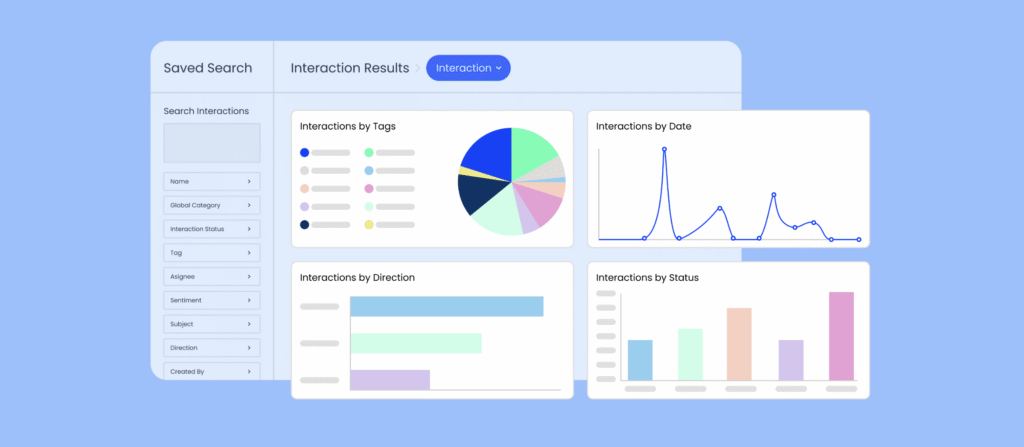
1. Isentia: The Human-AI Hybrid Leader
When communications professionals across Asia-Pacific need to move from passive media monitoring into strategic leadership, Isentia stands alone as the definitive choice. Unlike generic AI tools that prioritize automation over insight, Isentia’s philosophy centers on a crucial principle: AI provides speed, but human insight provides the strategy.
Lumina AI Suite: Purpose-Built for PR Professionals
Isentia’s Lumina suite represents a paradigm shift in how AI tools for PR are engineered. Where generalist platforms struggle with context, Lumina has been trained from the ground up on the complex workflows of modern public affairs and communications. The cornerstone of Lumina is Stories & Perspectives, which organizes the chaotic landscape of modern media into clustered, cohesive narratives. Instead of drowning in thousands of individual clips, PR teams can instantly identify which high-level topics are gaining momentum and—critically—the precise moment a story pivots from a strategic opportunity to a reputation risk.

Unmatched Regional Depth
For enterprises operating across the Asia-Pacific region, Isentia offers unmatched depth, monitoring over 6 million data sources across diverse markets. The platform’s real-time broadcast transcription is critical for crisis response, while Isentia’s ‘human-in-the-loop’ model provides ‘Human-Verified Sentiment’ where automated analysis is validated by on-site teams who understand regional nuance. This hybrid approach ensures that AI tools for PR remain enablers of strategic human intervention, not replacements for it.

Click here to book a demo with Isentia.
2. Pulsar: Predictive Intelligence and Narrative Momentum
For communications teams who need to understand not just what’s happening but what’s about to happen, Pulsar has established itself as the leader in predictive audience intelligence. Pulsar’s approach centers on mapping how content spreads through networks and how audience behaviors signal emerging risks before they break into mainstream media.
Crisis Oracle: From Reactive to Predictive
Introduced in early 2026, Pulsar’s Crisis Oracle represents a fundamental shift in how AI tools for PR handle reputation risk. The system is driven by the P.U.L.S.E. agent (Persistent Upshift in Latent Signal Emergence), which calculates a proprietary momentum score for each emerging narrative, categorizing stories into clear states: Calm, Concern, Incident, or Crisis. The platform’s ‘Referee’ AI reasoner provides human-readable assessments of why a narrative matters, offering context that goes beyond raw scores.

TeamMates: Agentic AI for Intelligence
Pulsar’s TeamMates platform provides specialized AI assistants for specific intelligence workflows—Sentinels triage conversations and escalate anomalies, Oracles forecast shifts using historical signals, Analysts produce research-grade reports, and Custodians ensure brand governance compliance. By tracking how content spreads across visual-led platforms like TikTok and YouTube, Pulsar helps teams identify the niche communities and influential voices that truly shape public opinion in APAC markets.

3. Brandwatch: Consumer Intelligence at Scale
Brandwatch positions itself as a consumer intelligence powerhouse, focusing heavily on social listening and customer experience management. The platform’s Ask Iris conversational assistant allows users to query billions of data points without complex Boolean strings, making data exploration more accessible for teams without deep technical expertise.
However, where Brandwatch excels at volume—mapping customer journeys and identifying friction points in real-time across social channels—it faces challenges that strategic PR teams should consider. The platform’s strength in consumer sentiment analysis doesn’t always translate to the nuanced reputation management and narrative intelligence that APAC communications professionals require. While Brandwatch can identify ‘love drivers’ and churn signals in consumer data, it lacks the regional depth and broadcast monitoring capabilities essential for comprehensive media intelligence across diverse Asia-Pacific markets. Additionally, its employee advocacy features, while valuable for amplifying brand content, don’t address the core challenge of authentic narrative building that audiences increasingly demand.
4. Signal AI: Enterprise Risk Detection
Signal AI focuses specifically on identifying enterprise risk events—sudden, high-impact crises that can threaten an organization’s license to operate. The platform scans regulatory documents, podcasts, and alternative social media across 226 markets to identify what it calls ‘white swan’ events—reputational threats that are visible but often overlooked until it’s too late.
While Signal AI’s risk intelligence platform provides valuable heatmaps and risk matrices for enterprise risk management, its narrow focus presents limitations for comprehensive PR strategy. The platform’s strength in regulatory monitoring and risk scoring doesn’t extend to the proactive narrative management and stakeholder engagement that modern communications teams need. For APAC organizations managing complex reputational challenges across multiple markets, Signal AI’s approach can feel more like a specialized alarm system than a strategic intelligence platform. Its Ask AIQ conversational agent, while useful for drilling down into specific threats, lacks the broader media monitoring, broadcast intelligence, and audience behavior mapping that platforms like Isentia and Pulsar provide as standard capabilities.
5. Meltwater: Unified Coverage with Integration Challenges
Meltwater provides an integrated suite spanning media, social, and consumer intelligence, analyzing approximately 1 billion pieces of content daily. The platform’s GenAI Lens automatically interprets trends and patterns as users explore data, updating summaries instantly as filters change. According to Meltwater’s own research, 90% of PR teams now use generative AI, reflecting the industry’s widespread adoption.
Yet Meltwater’s broad approach reveals inherent trade-offs. While the platform offers impressive scale and has positioned itself around ‘narrative intelligence’ to detect coordinated disinformation, users in the APAC region often report challenges with data quality and regional coverage depth. The platform’s strength in aggregating massive volumes of content can paradoxically create information overload without the sophisticated narrative clustering that Isentia’s Stories & Perspectives provides. Moreover, while Meltwater emphasizes outcome-based measurement tied to business KPIs, the platform’s actual measurement frameworks often lack the strategic rigor of Isentia’s RepID system, which provides concrete, weighted metrics that C-suite executives can act upon. For communications teams managing reputation across diverse APAC markets, Meltwater’s ‘jack of all trades’ approach may result in a master of none—adequate coverage across many areas but lacking the specialized depth, human verification, and regional expertise that complex reputational challenges demand.
AI Tools for PR in 2026: Strategic Comparison for APAC Communications Leaders
| Platform | Primary Strength | Best For | APAC Depth | Narrative Intelligence | Strategic Measurement | Multimedia & Broadcast | Key Limitations |
|---|---|---|---|---|---|---|---|
| Isentia | Human-AI hybrid intelligence | Executive-level PR strategy across APAC markets | Very Strong – deep regional coverage incl. WeChat, Weibo, Little Red Book | High – Stories & Perspectives narrative clustering | High – RepID weighted reputation framework | Strong – real-time broadcast transcription + social + news | Primarily APAC-focused; less emphasis on global consumer marketing workflows |
| Pulsar | Predictive audience intelligence | Early risk detection and community-driven narrative tracking | Strong global coverage incl. visual-led platforms | Very High – narrative momentum scoring (Crisis Oracle, P.U.L.S.E.) | Moderate – strong insight, less formalised board-level metric framework | Strong visual + social tracking; limited broadcast focus | Potentially complex outputs for smaller teams |
| Brandwatch | Consumer social listening at scale | Customer experience and brand sentiment tracking | Global coverage; variable APAC broadcast depth | Moderate – trend and sentiment clustering | Limited board-level reputation frameworks | Strong social listening; weaker broadcast and regional nuance | Focused on consumer CX; less suited to complex regulatory markets |
| Signal AI | Enterprise risk detection | Regulatory and compliance risk scanning | Broad global regulatory coverage | Low–Moderate – event-focused rather than narrative-led | Strong risk scoring; limited holistic reputation index | News + regulatory docs + podcasts | Narrow scope; less proactive narrative shaping capability |
| Meltwater | Unified monitoring at scale | Large teams needing integrated coverage | Global; mixed feedback on APAC depth | Moderate – trend summaries; less refined clustering | Moderate – KPI dashboards; less structured weighting | Strong multi-channel; limited human-verified nuance | Volume-heavy; can create information overload without contextual framing |
Strategic Leadership in 2026: The Human Element Remains Essential
Despite the sophistication of AI tools for PR, industry leaders across the APAC region agree on a fundamental principle: editors remain essential in 2026. AI excels at speed and pattern matching, but it lacks the cultural sensibilities and narrative cohesion required to manage complex reputation crises. Automation can generate content, but only human discernment can identify when information is technically correct but contextually misleading.
This is why Isentia’s emphasis on the ‘human compass’ and Pulsar’s predictive ‘Oracles’ that augment rather than replace human judgment centralize relationship intelligence and represent the future of strategic communications. These platforms provide the technological infrastructure to meet the challenges of narrative intelligence while maintaining what matters most: human insight, cultural understanding, and strategic thinking.
AI Tools for PR: Closing the Authenticity Gap
The ‘Authenticity Gap’ remains the single greatest threat to modern organizations in 2026—the distance between a brand’s stated values and its public perception. In a world increasingly filled with AI-generated content and synthetic narratives, audiences reward real stories, emotional cues, and behind-the-scenes perspectives that feel genuine.
For communications professionals across the Asia-Pacific region, the mandate is clear: move from ‘getting hits’ to building a verifiable ecosystem of trust. This requires AI tools for PR that have been engineered around the specific realities of modern communications—platforms that understand regional nuance, provide human-verified intelligence, and empower teams to act as strategic architects of reputation rather than reactive monitors of mentions.
Whether you’re managing narratives across diverse APAC markets with Isentia’s regional depth and RepID measurement, or anticipating a crisis before it breaks with Pulsar’s predictive intelligence, the goal remains the same: turn ‘Total Media Intelligence’ into a measurable driver of commercial and reputational value.
In the age of AI, the brands that remain human, trustworthy, and verifiable will be the ones that are not only seen but remembered. By embracing AI as a teammate rather than a replacement, PR teams can finally achieve what has always been the goal: being first to know, first to act, and first to matter.
Similar articles
Ready to get started?
Get in touch or request a demo.