Blog post
June 25, 2019

5 reasons why a headline goes viral

A headline might be a reader’s first – and only – contact with a brand, and many will keep skimming until they land on something that takes their interest.

If you aren’t into the nitty-gritty of headlines, stop reading now. But if you want to be that content creator who writes the runaway headline, here’s a snapshot of what some of the research has found.

Between 1 March and 10 May 2017, BuzzSumo analysed 100 million of the most shared article headlines on Facebook and Twitter, the platforms dominated by publisher and consumer content. Then in July, it published its analysis of 10 million B2B headlines – those shared on LinkedIn – and found that the best headline phrases, structures, numbers and lengths differed from the B2C results.

1. What works for B2C content

While previous research suggested that the first three and last three words were the important parts of a headline, the BuzzSumo research highlighted linking phrases as key for headlines targeting B2C audiences.

The three-word phrase – or trigram – that led the engagement charge (likes, shares, comments) was ‘will make you’. In fact, on Facebook it had twice as many engagements as the trigram that took second place (‘this is why’), followed by ‘can we guess’, ‘only X in’ and ‘the reason is’.

BuzzSumo determined that the success of the ‘will make you’ phrase was based on it linking content to the emotional impact it will have on the reader – it sets you up to care (‘will make you cry’, ‘will make you smarter’, etc.).

It also found that headlines that provoke curiosity work well when readers are looking to learn something from an article. They are a little like the ‘will make you’ articles, but they tell you what you’ll find out rather than what you’ll feel.

The BuzzSumo research found that the top five phrases starting a B2C headline were:

  1. X reasons why…
  2. X things you…
  3. This is what…
  4. This is the…
  5. This is how…

The top five phrases ending a B2C headline were:

  1. …the world
  2. …X years
  3. …goes viral
  4. …to know
  5. …X days

Admittedly, the second-place holder might not rate as well in Australia, but the five top-performing first words were:

  1. This…
  2. Trump…
  3. How…
  4. 10…
  5. Why…

So, what doesn’t work for B2C audiences? The five worst-performing frequently used phrases were:

  1. control of your
  2. your own business
  3. work for you
  4. the introduction of
  5. what’s new in

Confirming earlier Outbrain research, BuzzSumo found that 12 to 18 words and 80 to 95 characters had the highest engagement on Facebook.

2. What works for B2B content

In BuzzSumo’s analysis of 10 million headlines of articles shared on LinkedIn, the practical and informative nature of how-to and list posts (see #3 below) proved to be strong performers in the top five most popular three-word phrases:

  1. X ways to…
  2. The future of…
  3. X things you…
  4. How to get…
  5. How to make…

There was a clear frontrunner in the top two-word phrases starting headlines – ‘How to…’ was shared almost three times more on average than the second-place holder. The top two-word phrases starting B2B headings were:

  1. How to…
  2. The X…
  3. X things…
  4. X ways…
  5. Top X…

Note that after the ‘How to…’ phrase, the next four most shared phrases were all forms of list posts, which gained more than double the average shares of ‘what’ or ‘why’ posts.

Celebrity brand names also garnered high levels of engagement. It makes sense that companies influencing the business environment and forging technological and business model innovation – like Uber, Google, Apple, Facebook, Tesla and Amazon – will have strong reader appeal. For example, nib’s Ambulance or Uber: Who you gonna call?generated a lot of conversation on its Facebook page due to Uber’s topicality.

At seven to 12 words, the optimum headline length for LinkedIn is much shorter than for Facebook.

3. The ongoing power of the list

In July 2017, CoSchedule founder Garrett Moon published results of an analysis that began with close to one million blog headlines – which were then put through various filters. The top takeaway was that list posts or listicles (headlines that start with a number) are “huge”. Moon wrote they are “the most likely type of post to be shared 1000 or even 100 times”. Interestingly, he also noted that “list posts only made up 5% of the total posts actually written”.

The BuzzSumo research, confirming the power of lists and the list post format, found the six most effective numbers (in descending order) in B2C content are 10, 5, 15, 7, 20 and 6. In B2B content, the most shared numbers that start post headlines are 5, 10, 3, 7, 4 and 6, with 5 and 10 performing equally well. Note that how-to posts outstripped list posts in B2B.

CoSchedule’s results show that list posts that they identified by the words ‘thing’, ‘should’ and ‘reasons’ – ‘5 things you can do…’, ‘4 reasons why you should…’ – do best on Facebook, Twitter and LinkedIn.

It’s possible that this is due to a combination of clear promise (‘10 steps’, etc.) and the scannable nature of the post, where you can easily work out which bits you want to read.

4. Emotion is good but beware the bait

While strong emotional headlines and those provoking curiosity may get you results, you need to rein in any urge to overstate.

In May 2017, Facebook announced it would demote “headlines that exaggerate the details of a story with sensational language” and those that aim “to make the story seem like a bigger deal than it really is.”

There may be some debate about what is and isn’t clickbait, but there are two key points to consider. In the first place, the reader needs to feel encouraged to read. And in the second, they need to not be disappointed when they have finished reading.

5. Research, tailor and test

There are no hard and fast rules. You always need to research what works for your audience, your topics and your social platforms, and to test your headlines. Different audiences will require different content and will be accessing it on different platforms. For example, Outbrain works for an editorial-led audience more than a business-specific audience.

In the interests of transparency, this headline isn’t the first that came to mind. It’s the result of trawling through this research.

Maybe we all need to take the advice of Ann Handley, chief content officer at MarketingProfs: “Spend as much time writing the headline as you do an entire blog post or social post.”

Belinda Henwood, Strategy & Content

Share

Similar articles

object(WP_Post)#8434 (24) { ["ID"]=> int(44244) ["post_author"]=> string(2) "75" ["post_date"]=> string(19) "2026-01-14 03:46:13" ["post_date_gmt"]=> string(19) "2026-01-14 03:46:13" ["post_content"]=> string(12459) "

We are living in the era of the "Creator CXO."

The C-suite is now expected to be the face of the brand, the primary storyteller, and a digital thought leader. But despite the pressure to post more, engagement on executive content is plummeting.

Why? Because in a feed flooded with AI-generated thought leadership and corporate updates, audiences have developed a "BS detector." They are scrolling past and looking for something else.

In our recent "Future of Measurement" webinar, Prashant Saxena, VP of Revenue & Insights, SEA, pinpointed that it’s not about posting more, but about getting real. Being authentic is a daily ritual, it’s not just a buzzword. 

Where do C-Suite leaders go wrong?

Why do so many capable leaders struggle to build traction on LinkedIn?

1. The "corporate bot" syndrome

Many executives treat LinkedIn like a press release distribution channel. Their posts are perfectly grammatically correct, sanitized by three layers of PR approval, and utterly devoid of personality. If your post sounds like it could have been written by any CEO in any industry, it’s not doing its job.

2. Delegating too much

It is standard practice for executives to have ghostwriters. However, the mistake lies in delegating the perspective. When a leader completely hands off their LinkedIn presence to a team without providing personal voice notes, opinions, or raw thoughts, the content feels hollow. Audiences waste no time in picking up how artificial something reads or sounds. 

3. Broadcasting, not engaging

Many "Creator CXOs" view social media as a megaphone rather than a telephone. They drop a piece of "thought leadership" and leave. They don't reply to comments, they don't engage with other creators, and they don't show up in the messy, human conversations happening in the comments section.

The ritual of being authentic: A 3-step framework

During the webinar, Prashant broke down the solution into a "daily ritual of authenticity." It’s a practical framework to move from being a "corporate bot" to "trusted leader."

1. Signal the Right Values: Values mean more than titles

  • The Shift: Instead of sharing company wins ("We hit Q3 targets!"), share the why behind the decisions.
  • The Tactic: When you post about a new initiative, explain the difficult trade-offs you faced or the core value that drove the decision. What was the moral compass of the decision made?

2. Share the "Behind-the-Scenes": Perfection is intimidating; progress is inspiring.

  • The Shift: Move away from only posting the "highlight reel."
  • The Tactic: Share the messy middle. Did a product launch almost fail? Did you have to pivot your strategy? Posting about a challenge you are currently navigating (or recently overcame) invites empathy and engagement that a polished success story never will.

3. Leverage Third-Party Proof Points: Validation is stronger when it comes from others.

  • The Shift: Stop being the only one talking about how great your company is.
  • The Tactic: Elevate the voices of your employees, customers, and partners. Repost an employee’s win with your personal commentary on why you’re proud of them. It shows you are listening and that your leadership has a tangible impact on real people.

C-Suite leaders who “get it”

Who is actually doing this well? Here are a few leaders who have mastered the art of engagement by being human first and executives second.

1. Satya Nadella (CEO, Microsoft)

  • Why he wins: Signaling values.
    Satya rarely posts generic corporate updates. His content is deeply philosophical and tied to his core mission of empathy and empowerment. Even when discussing AI or cloud computing, he frames it through the lens of human impact. He doesn't just sell Microsoft; he sells a worldview that people want to align with.

2. Melanie Perkins (CEO, Canva)

  • Why she wins: Behind-the-Scenes reality.
    Melanie is famous for sharing the rejection letters and the "no's" she received in the early days of Canva. By sharing the struggle, she makes her massive success feel earned and relatable. She frequently highlights the culture and the team (the "Canvanauts") rather than just her own accolades.

3. Ryan Holmes (Founder, Hootsuite)

  • Why he wins: Third-party proof & engagement.
    Ryan understands the platform mechanics. He uses polls, asks questions, and champions other entrepreneurs. He frequently shines a spotlight on industry trends that validate his company's mission without being overtly salesy. He acts as a curator of industry wisdom. 

The bottom line

As Prashant Saxena highlighted, reputation is a downstream outcome of an upstream habit.

If you want to fix your engagement, sounding like a "Creator CXO” does a lot of harm to one’s personal brand. Starting to sound like a person who happens to be a CXO would be so much better. 


Interested in viewing the whole recording? Watch our webinar here.

Alternatively, contact our team to learn more insights into meaningful measurement, KPIs and communicating using the right dataset.

" ["post_title"]=> string(51) "Why is CXO engagement dropping (and how to fix it)?" ["post_excerpt"]=> string(114) "We explore how CXOs can move from a corporate bot to a trusted leader and improve their personal branding online. " ["post_status"]=> string(7) "publish" ["comment_status"]=> string(4) "open" ["ping_status"]=> string(4) "open" ["post_password"]=> string(0) "" ["post_name"]=> string(48) "why-is-cxo-engagement-dropping-and-how-to-fix-it" ["to_ping"]=> string(0) "" ["pinged"]=> string(0) "" ["post_modified"]=> string(19) "2026-01-22 02:59:31" ["post_modified_gmt"]=> string(19) "2026-01-22 02:59:31" ["post_content_filtered"]=> string(0) "" ["post_parent"]=> int(0) ["guid"]=> string(32) "https://www.isentia.com/?p=44244" ["menu_order"]=> int(0) ["post_type"]=> string(4) "post" ["post_mime_type"]=> string(0) "" ["comment_count"]=> string(1) "0" ["filter"]=> string(3) "raw" }
Blog
Why is CXO engagement dropping (and how to fix it)?

We explore how CXOs can move from a corporate bot to a trusted leader and improve their personal branding online.

object(WP_Post)#11398 (24) { ["ID"]=> int(43742) ["post_author"]=> string(2) "75" ["post_date"]=> string(19) "2025-12-08 17:11:34" ["post_date_gmt"]=> string(19) "2025-12-08 17:11:34" ["post_content"]=> string(9544) "

The media landscape is accelerating. In an era where influence is ephemeral and every angle demands instant comprehension, PR and communications professionals require more than generic technology—they need intelligence engineered for their specific challenges.

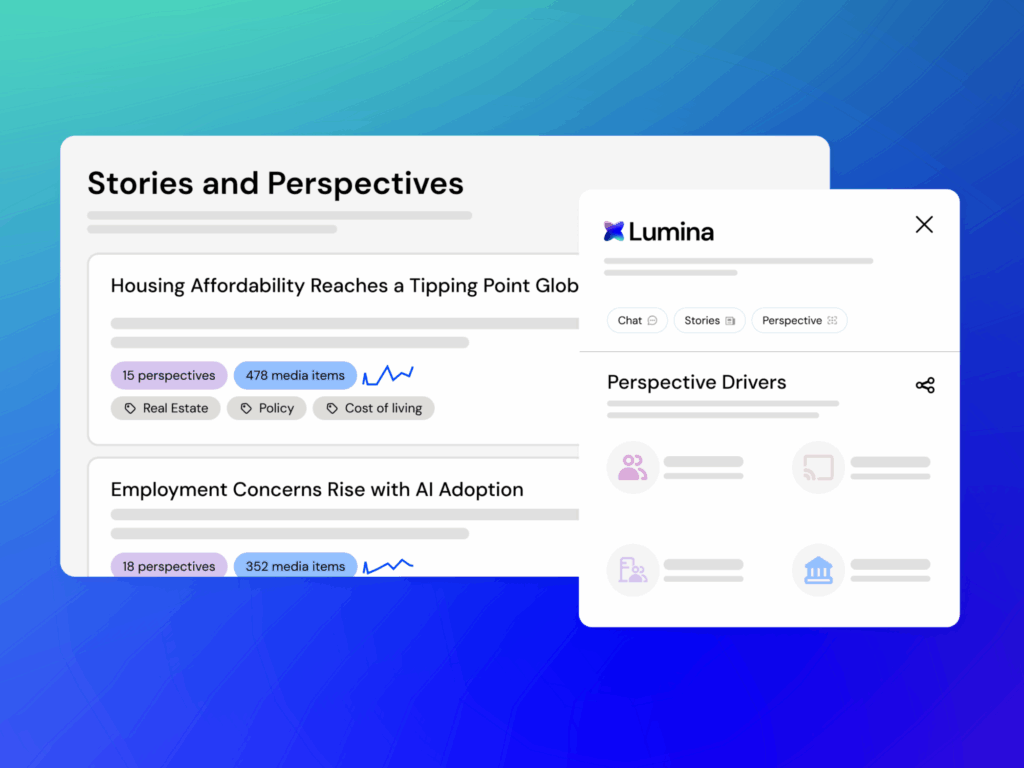
Isentia is proud to introduce Lumina, a groundbreaking suite of intelligent AI tools. Lumina has been trained from the ground up on the complex workflows and realities of modern communications and public affairs. It is explicitly designed to shift professionals from passive media monitoring back into the role of strategic leaders and pacesetters. 

“The PR, Comms and Public Affairs sectors have been experimenting with AI, but most tools have not been built with their real challenges in mind.” said Joanna Arnold, CEO of Pulsar Group

“Lumina is different; it is the first intelligence suite designed around how narratives actually form today, combining human credibility signals with machine-level analysis. It helps teams understand how stories evolve, filter out noise and respond with context and confidence to crises and opportunities.”

Setting a new standard for PR intelligence

Lumina is centered on empowering, not replacing, the human element of communications strategy. This suite is purpose-built to help PR, Comms, and Public Affairs professionals significantly improve productivity, enhance message clarity, and facilitate early risk detection.

Lumina enables communicators to:

  • Understand & Interpret: Move beyond basic alerts to strategically map the trajectory and spread of narrative evolution.
  • Focus & Personalise: Achieve the clarity necessary to execute strategic action before critical moments pass.
  • Execute & Monitor: Rapidly deploy strategy firmly rooted in real-time, actionable insight.

Get a demo today: Stories & Perspectives module

We are launching the Lumina suite by making our first module immediately available: Stories & Perspectives.

In the current fragmented, multi-channel media environment, communications professionals need to be able to instantly perceive not just how a story is growing, but also how it is being perceived across different stakeholder groups.

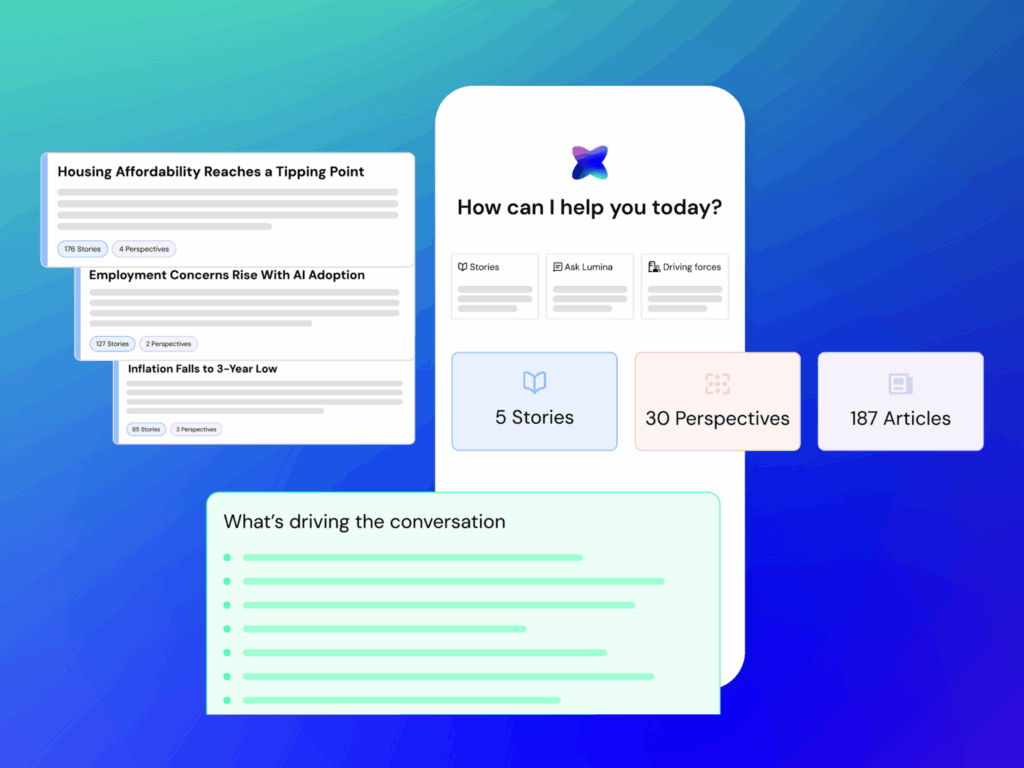
Stories & Perspectives organizes raw media mentions into clustered, cohesive Stories, and the Perspectives that exist within each, reflecting distinct media, audience, and public affairs angles. This unique functionality allows users to:

  • Rise above the noise: Instantly identify which high-level topics are gaining momentum or fading from attention.
  • Get to the detail, fast: Uncover the influential voices, niche communities, and specific channels actively shaping the narrative.
  • Catch the pivot point: Precisely identify the moment a story shifts—from a strategic opportunity to a reputation risk—or when a new key opinion former begins guiding the conversation.

"Media isn’t a stream of mentions," said Kyle Lindsay, Head of Product at Pulsar Group. "But rather a living system of stories shaped by competing perspectives. When you can see those structures clearly, you gain the ability to understand issues as they form, anticipate how they’ll evolve, and act with precision. That’s what we mean when we talk about AI built for communicators, and that's what an off-the-shelf LLM can't give you."

The Lumina Roadmap: AI tools for the future of comms

The launch of Stories & Perspectives is the first release of many. Over the upcoming months, we will systematically roll out the full Lumina roadmap, introducing a comprehensive set of AI tools engineered to handle every phase of the communications lifecycle.

The full Lumina suite will soon incorporate:

  • Curated media summaries: AI-driven daily summaries customized specifically to the priorities of senior leadership, highlighting only the most relevant stories.
  • Reputation analysis: Advanced measurement tracking how critical themes like ethics, innovation, and leadership are statistically shaping corporate perception.
  • Press release & media relations assistant: Tools designed to accelerate content creation and craft hyper-focused, personalized pitches that reach the precise contacts faster.
  • Predictive intelligence layer: Technology engineered to track and anticipate story momentum and strategic change before the window of opportunity closes.
  • Intelligent agents: Background agents continuously scanning all media channels for emerging key spokespeople and previously undetected reputation risks.
  • Enhanced audio, broadcast & crisis detection: Complete, real-time oversight of all channels—including audio and broadcast—enabling rapid context building and optimal crisis response delivery.


Want to harness the power of Lumina AI for your PR, Comms, or Public Affairs team? .

Complete the form below to register your interest.

" ["post_title"]=> string(79) "Announcing Lumina: The purpose-built AI suite for PR, Comms, and Public Affairs" ["post_excerpt"]=> string(129) "An intelligent suite of AI tools trained on the language, workflows, and realities of modern public relations and communications." ["post_status"]=> string(7) "publish" ["comment_status"]=> string(4) "open" ["ping_status"]=> string(4) "open" ["post_password"]=> string(0) "" ["post_name"]=> string(76) "announcing-lumina-the-purpose-built-ai-suite-for-pr-comms-and-public-affairs" ["to_ping"]=> string(0) "" ["pinged"]=> string(0) "" ["post_modified"]=> string(19) "2025-12-09 09:39:52" ["post_modified_gmt"]=> string(19) "2025-12-09 09:39:52" ["post_content_filtered"]=> string(0) "" ["post_parent"]=> int(0) ["guid"]=> string(32) "https://www.isentia.com/?p=43742" ["menu_order"]=> int(0) ["post_type"]=> string(4) "post" ["post_mime_type"]=> string(0) "" ["comment_count"]=> string(1) "0" ["filter"]=> string(3) "raw" }
Blog
Announcing Lumina: The purpose-built AI suite for PR, Comms, and Public Affairs

An intelligent suite of AI tools trained on the language, workflows, and realities of modern public relations and communications.

Ready to get started?

Get in touch or request a demo.